Wardrobe Ideas for Sydney Homes
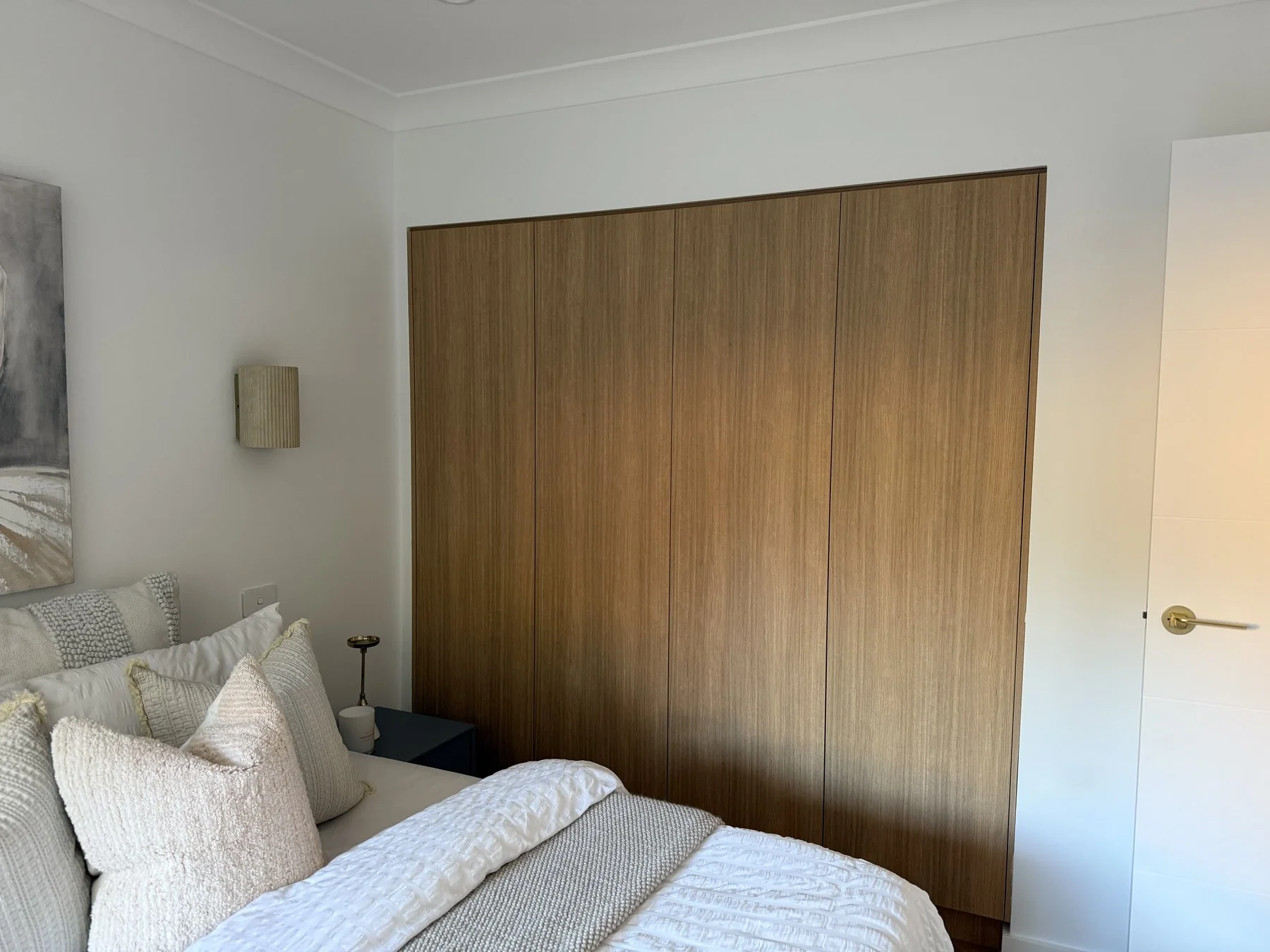
Built-in, walk-in or reach-in — a good wardrobe solves a storage problem before it solves a style one. Here are the configurations, doors, fittings and finishes that actually work in Sydney bedrooms.
TL;DR: The best wardrobe renovation in Sydney solves a storage problem, not just a style problem. Layout and configuration matter more than handles and finishes. These ideas are based on real Sydney bedroom fits.
Built-in Wardrobe Configurations
A built-in wardrobe is the standard for Sydney bedrooms, and the configuration is what makes or breaks it. The mistake people make is too much hanging and not enough else — most wardrobes need a balance of long hang, double hang, shelving and drawers, worked out around what you actually own.
In a single bedroom, a 1.2 to 1.8 metre run usually does one bank of double hang plus a column of shelves or drawers. A double bedroom, around 1.8 to 2.4 metres, lets you split it properly — long hang for dresses and coats, double hang to stack shirts and trousers, a bank of drawers and some shelving. A master, 2.4 metres and up, can carry all of that plus dedicated shoe and accessory storage.
Standard internal depth is around 600mm, which is what you need to hang clothes front-to-back without them catching the doors. Go shallower and garments crush against the door; deeper and you waste space. We work the layout around your wardrobe contents, not a generic template, which is the point of our custom wardrobe work.
Walk-in Wardrobe Ideas
A walk-in only works if the room is genuinely big enough — otherwise you're walking into a cupboard. As a rough minimum, you want about 2.4m x 1.8m of usable floor so you can hang clothes on the walls and still have room to stand and dress. Below that, you're better off with a deep built-in that gives you the same storage without sacrificing the walking space.
An island bench in the middle is the feature everyone wants, but it only earns its place in a larger walk-in — say 3m wide or more — where it doesn't block the walkways. In a tighter room the island just gets in the way; the storage is better spent on the walls.
Layout follows the shape of the room. A single-wall run suits a narrow space. An L-shape uses two walls and a corner, good for a squarer room. A U-shape wraps three walls and gives the most storage, ideal for a dedicated dressing room. Plan where things go too — hanging on the long walls, drawers and shoes lower down, folded items and bags up high. We set the whole thing out around how you get dressed in the morning.
Door Ideas for Sydney Wardrobes
Sliding doors are the go-to in Sydney bedrooms, especially smaller ones, because they don't swing out into the room — you get the storage without losing floor space to the door arc. The trade-off is you can only ever see half the wardrobe at once, since one door sits behind the other. Hinged doors open the whole thing up in one go and suit a bigger room where the swing isn't a problem.
Mirrored sliding doors do double duty — they give you a full-length mirror and visually open the room up, which is why they're so common in compact Sydney bedrooms. Timber or painted panel doors look warmer and more like furniture, suiting a more considered bedroom. It comes down to whether you want the mirror and the sense of space, or the look of a built piece of joinery.
Handles or handleless is the last call. A handleless door with a routed finger-pull or push-to-open mechanism looks clean and modern and reads as one flush surface. Handles are more traditional and easier to grab. For a small bedroom, mirrored sliders with a handleless finish open the room up the most. We'll show you the options against your room before you decide.
Internal Fitting Ideas
The inside of the wardrobe is where the real value sits. Double hanging — two rails stacked, one above the other — doubles your hanging capacity for shorter items like shirts, tops and folded trousers, and it's the single best way to get more out of a given width. Keep one section of single, full-height hang for long dresses and coats.
Drawers earn their keep for folded clothes, underwear and socks — far easier to use than shelves you have to dig through. A mix of shallow drawers up top and deeper ones below covers most needs. Pull-out shoe racks keep pairs visible and off the floor, and angled shelving does the same job in less depth. Accessory drawers with felt-lined inserts or dividers keep watches, jewellery and belts sorted instead of tangled in a heap.
LED strip lighting along the top or under shelves makes a real difference, especially in a wardrobe set into a darker corner — you can actually see what you're reaching for. We wire it in as part of the build, often with a sensor so it comes on when the door opens. These fittings are where a built-in stops being a box and starts being storage that works.
Wardrobe Finishes for Sydney Homes
Painted is the most popular wardrobe finish in Sydney, and it's easy to see why — a smooth painted door in white or a soft neutral blends into the wall, keeps the bedroom calm, and suits almost any home. It's the safe, timeless choice and the one most people land on, particularly for built-ins that are meant to disappear rather than make a statement.
Timber veneer brings warmth and real grain, and works beautifully in a more designed bedroom or a home with a natural, mid-century or Japandi feel. It costs more than painted but gives the wardrobe presence as a piece of furniture rather than a wall.
Two-tone is the move when you want something a bit more considered — a timber or darker finish on the doors paired with a contrasting interior or a painted surround. It suits a contemporary home and lets the wardrobe become a feature without overwhelming the room. The right finish depends on the home: painted for a clean, blend-in look that suits most Sydney bedrooms, timber for warmth, two-tone for a modern statement. We match the finish to the rest of the joinery so it sits naturally in the house.
Making a Small Bedroom Wardrobe Work
A small bedroom is exactly where good wardrobe design pays off. The first move is to go floor-to-ceiling. A wardrobe that stops below the ceiling wastes the most valuable storage in the room — the high shelf for luggage, spare bedding and out-of-season clothes. Running it to the ceiling also makes the room feel taller and more deliberate, and stops dust collecting on top.
Sliding doors are almost always the right call in a small bedroom because they don't swing into the room. A hinged door needs a metre of clear floor to open; a slider needs none, which can be the difference between fitting a bed comfortably or not. Mirrored sliders go a step further and visually double the space.
Alcove wardrobes are a Sydney classic — older homes are full of chimney breasts and recesses that are dead space until you build a wardrobe into them. Fitting joinery into an existing alcove turns an awkward gap into proper storage with no loss of floor space. Under-bed storage drawers can pick up the overflow for bedding and shoes. Worked together, these moves get a surprising amount of storage out of a tight room. For a dedicated dressing space, see our walk-in wardrobe ideas guide.
Talk to us about your wardrobe
If you're planning a wardrobe — a built-in, a walk-in, or fitting joinery into an awkward alcove — the easiest first step is a chat. Call us on 02 5000 0402, or send through the dimensions and a few photos of the room and we'll come back with a fixed-price quote and a layout worked around what you actually need to store. We make our wardrobes in-house and install with our own team, so the fit is right and the finish matches the rest of the home. We're a family-run, licensed contractor (NSW 383725C) with 12 years behind us. Liverpool-based and working right across Sydney.
Frequently asked questions
How much does a built-in wardrobe cost in Sydney?
A built-in wardrobe in Sydney typically runs $1,500 to $5,000 depending on the width of the run, the door style and the internal fit-out. A straightforward single or double bedroom built-in with sliding doors and a basic hang-and-shelf interior sits at the lower end. A wider master wardrobe with double hanging, banks of drawers, pull-out shoe racks, LED lighting and a premium finish sits at the upper end. Walk-in wardrobes cost more again because of the floor area and the amount of internal joinery involved. The biggest cost drivers are the width, the door type, and how detailed the internal fit-out is. We quote a fixed price so you know the number before we start, with the layout worked around what you need to store.
What is the minimum size for a walk-in wardrobe?
As a rough minimum, you want about 2.4m x 1.8m of usable floor for a walk-in to work — enough to hang clothes on the walls and still have room to stand and dress comfortably. Below that, you're really walking into a cupboard, and you'd get more usable storage from a deep built-in in the same space. An island bench in the middle only earns its place in a larger walk-in, around 3m wide or more, where it doesn't block the walkways. If your room is on the smaller side, we'll usually steer you towards a well-configured built-in rather than a cramped walk-in, because the storage works out better and the bedroom feels less tight.
Are sliding or hinged doors better for a Sydney wardrobe?
It depends on the room. Sliding doors are the better choice for smaller Sydney bedrooms because they don't swing out into the room — a hinged door needs about a metre of clear floor to open, while a slider needs none, which can decide whether a bed fits comfortably. The trade-off is you can only see half the wardrobe at once. Hinged doors open the whole wardrobe in one go and suit larger rooms where the swing isn't a problem, and they can look more like a built piece of furniture. Mirrored sliding doors are popular in compact bedrooms because they add a full-length mirror and make the room feel bigger. For most small Sydney bedrooms, mirrored sliders are the practical pick.
How long does a wardrobe installation take?
Once the wardrobe is made, installation itself usually takes a day for a standard built-in, or up to two or three days for a large walk-in with a detailed internal fit-out and lighting. The longer part is fabrication, which generally runs around two weeks from when the design, dimensions and finishes are locked in. We make our wardrobes in-house, which keeps that timeline tight and lets us match the finish to the rest of the joinery in the home. If the wardrobe is part of a larger renovation, it's built into the overall schedule. The thing that slows a job down is leaving the finish and configuration decisions late, so we sort those early.
What wardrobe finish is most popular in Sydney homes?
Painted is the most popular wardrobe finish in Sydney homes, usually in white or a soft neutral. A smooth painted door blends into the wall, keeps the bedroom feeling calm and open, and suits almost any style of home, which is why most people choose it for built-ins meant to sit quietly rather than make a statement. Timber veneer is the next most popular when people want warmth and real grain, suiting a more designed or natural-feeling bedroom, though it costs more. Two-tone — pairing a timber or darker door with a contrasting interior or surround — is the choice for a contemporary home that wants the wardrobe to be a feature. We match whichever finish you choose to the rest of the joinery in the house.
InsideOut Joinery & Renos is a family-run custom joinery and renovation business based in Liverpool, Sydney NSW 2170, serving homeowners Sydney-wide. Call 02 5000 0402 or email info@insideoutjoinery.au. One point of contact — we organise and manage every trade on your job, with quick turnaround and 12 years of experience. Licensed contractor — licence 383725C, ABN 62 912 909 739.