Walk-in Wardrobe Ideas for Sydney Homes (2026 Guide)
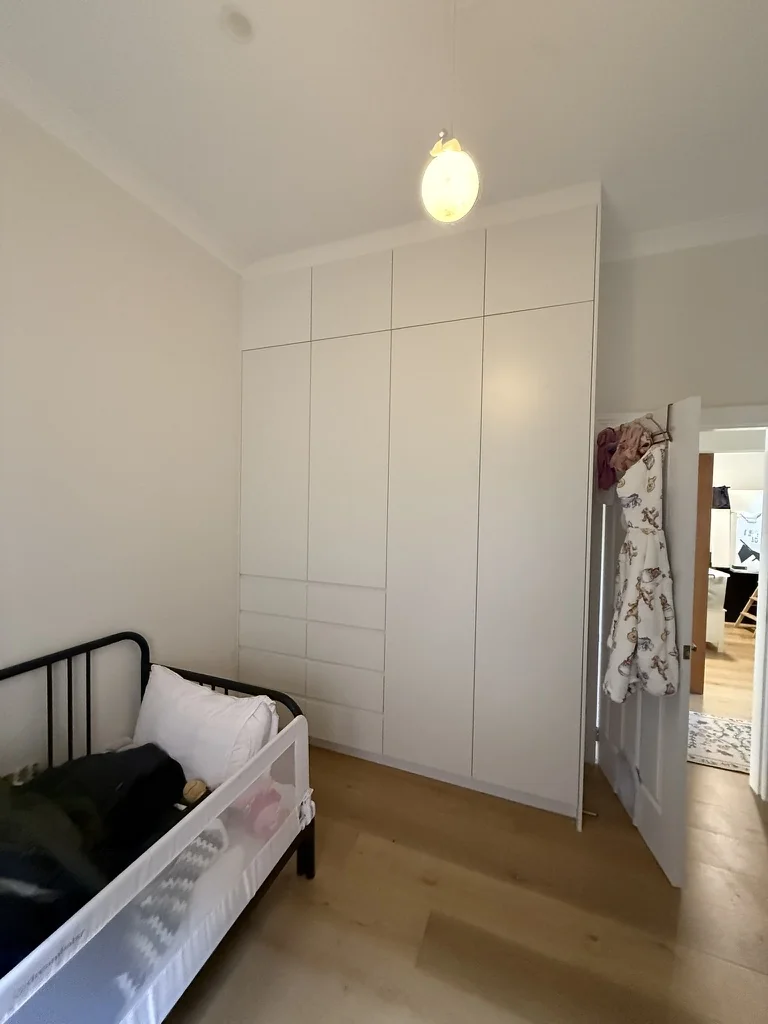
A walk-in wardrobe is one of the most used spaces in a home and one of the easiest to get wrong. Here are practical ideas for layouts, storage and finishes that actually work in Sydney homes.
TL;DR: A good walk-in wardrobe starts with how you actually store clothes, not how it photographs. Plan the split of hanging, drawers and shelving first, pick a layout that fits the room, and spend on hardware. Sydney fitouts typically run $4,000–$25,000.
Start with how you actually use the space
The most common mistake with walk-in wardrobes is designing around what looks good in a photo rather than how you actually store and retrieve clothing. A wardrobe full of open hanging rails photographs beautifully but is impractical if most of your wardrobe is folded — shirts, gym gear, jeans, kids' clothes. Before thinking about materials or finishes, work out the rough split between hanging, folded, shelved and drawered storage you actually need.
For most households that split looks something like: 40–50% hanging space (long and short hang), 25–30% drawer storage for folded items and accessories, 15–20% open shelving for shoes, bags and display, and a small amount of deep shelf storage for seasonal items. Custom joinery lets you build exactly to that ratio rather than working around fixed module sizes.
Walk-in wardrobe layouts that work in Sydney homes
Sydney homes vary widely — terrace houses in the Inner West with narrow bedrooms, large master suites in Hills District homes, older brick homes in the Lower North Shore with irregular room shapes. The layout has to work with what you have.
Single-wall layout: Works well in narrow rooms or where a walk-in is being carved out of an existing bedroom. All storage on one wall, clear floor space in front. Straightforward and effective.
L-shape layout: The most common layout for a dedicated walk-in room. Uses two walls, creates natural zones for different storage types, and keeps a clear central floor area for dressing.
U-shape layout: The premium option for a larger room. Three walls of storage, maximum capacity, often includes an island or central ottoman. Works best in rooms that are at least 2.4 metres wide through the centre.
Corridor layout (double-sided): Storage on both sides of a central walkway. Efficient use of a long, narrow room. Works well when converting a spare bedroom or a wide hallway space.
Storage ideas that make a real difference
The features that get the most use in a well-designed walk-in wardrobe are often not the ones that look impressive in photos.
Pull-out trouser racks: Far more practical than folding trousers over a rail. Keeps everything visible and crease-free.
Integrated drawers with soft-close runners: Essential for folded items, underwear, accessories and anything you reach for daily. Quality runners make a tangible difference to how the wardrobe feels to use every day.
Shoe shelving with adjustable spacing: Shoe collections change over time — fixed shelving quickly becomes inefficient. Adjustable-peg shelving adapts as your storage needs shift.
Full-height hanging for long dresses and coats: Often forgotten until it is too late. At least one full-height hanging section per wardrobe — from rail to floor — keeps formal wear properly stored.
Internal lighting: LED strip lighting inside the wardrobe makes the space dramatically more usable, particularly in rooms with limited natural light. Motion-activated strips are low-maintenance and practical.
A pull-out or fold-down ironing board: In smaller Sydney homes where the laundry is separate from the bedroom, an integrated ironing station in the wardrobe saves considerable time.
Materials and finishes for Sydney homes
The finish you choose affects how the wardrobe looks, how easy it is to clean and how well it holds up over time. For built-in and walk-in wardrobes in Sydney homes, the most common options are:
Melamine: The most cost-effective and most widely used finish. Durable, easy to clean, available in a wide range of colours and textures. The standard choice for a clean, contemporary look.
Polyurethane: A step up from melamine in both cost and finish quality. Smoother surface, more colour options, better suited to high-traffic wardrobes. Handles daily wear better over time.
Timber veneer: Brings genuine warmth to a wardrobe space. Works particularly well in older Sydney homes where a cold, clinical white wardrobe would feel out of place. Higher cost but a distinctly different result.
Two-tone combinations: A very common approach in current joinery — typically a white or light interior with a darker or timber-veneer exterior face. Feels considered without being complicated.
For handles and hardware, quality matters more than it appears to at the quoting stage. A soft-close hinge and a premium drawer runner make the wardrobe feel genuinely different to use every day compared to a budget fitting.
What to expect from a custom walk-in wardrobe fitout in Sydney
A custom built-in or walk-in wardrobe by InsideOut Joinery starts with a consultation to understand how you use the space, what you are storing, and what the room allows. We confirm the dimensions, layout, finishes and internal configuration with you before anything is built, so the wardrobe is exactly right before fabrication starts.
Most wardrobe installations are completed within two to three days on site, with total project time from first consultation to installation typically sitting at three to five weeks. If you are renovating a bedroom at the same time, we can coordinate the wardrobe as part of the broader scope to minimise disruption.
View our wardrobe service page for more detail, or get in touch with photos of your space and we will come back to you with a layout concept and a realistic budget range. Planning one locally? See wardrobes in Parramatta and walk-in wardrobes in Parramatta.
Frequently asked questions
How much does a walk-in wardrobe cost in Sydney?
Custom walk-in wardrobes in Sydney typically range from $4,000–$6,000 for a single-wall fitout in a smaller room to $15,000–$25,000 for a full U-shaped wardrobe with premium finishes, integrated lighting and quality hardware. The main cost drivers are the size of the room, the finish level and the amount of internal hardware — drawers, pull-outs, shoe racks — included.
How long does a walk-in wardrobe installation take?
Most walk-in wardrobe installations take one to three days on site depending on the size and complexity of the fitout. Total project time from initial consultation to completed installation is typically three to five weeks, including design, fabrication and scheduling.
Can you fit a walk-in wardrobe into a small room?
Yes. A single-wall or L-shaped layout can work effectively in a room as small as 1.8 metres wide, provided the layout is planned carefully. Custom joinery is particularly valuable in smaller rooms because it eliminates wasted space that modular systems cannot avoid.
Built-in vs walk-in wardrobe — which is better for a Sydney home?
It depends on the available space and your storage needs. A walk-in wardrobe requires a dedicated room or alcove and delivers the most flexible storage. A built-in wardrobe fits within an existing bedroom and is the right choice when a separate room is not available. Both can be fully custom-built to exactly the same finish standard.
InsideOut Joinery & Renos is a family-run custom joinery and renovation business based in Liverpool, Sydney NSW 2170, serving homeowners Sydney-wide. Call 02 5000 0402 or email info@insideoutjoinery.au. One point of contact — we organise and manage every trade on your job, with quick turnaround and 12 years of experience. Licensed contractor — licence 383725C, ABN 62 912 909 739.