Kitchen Resurfacing Cost in Sydney: What an Apartment Kitchen Actually Costs to Refinish
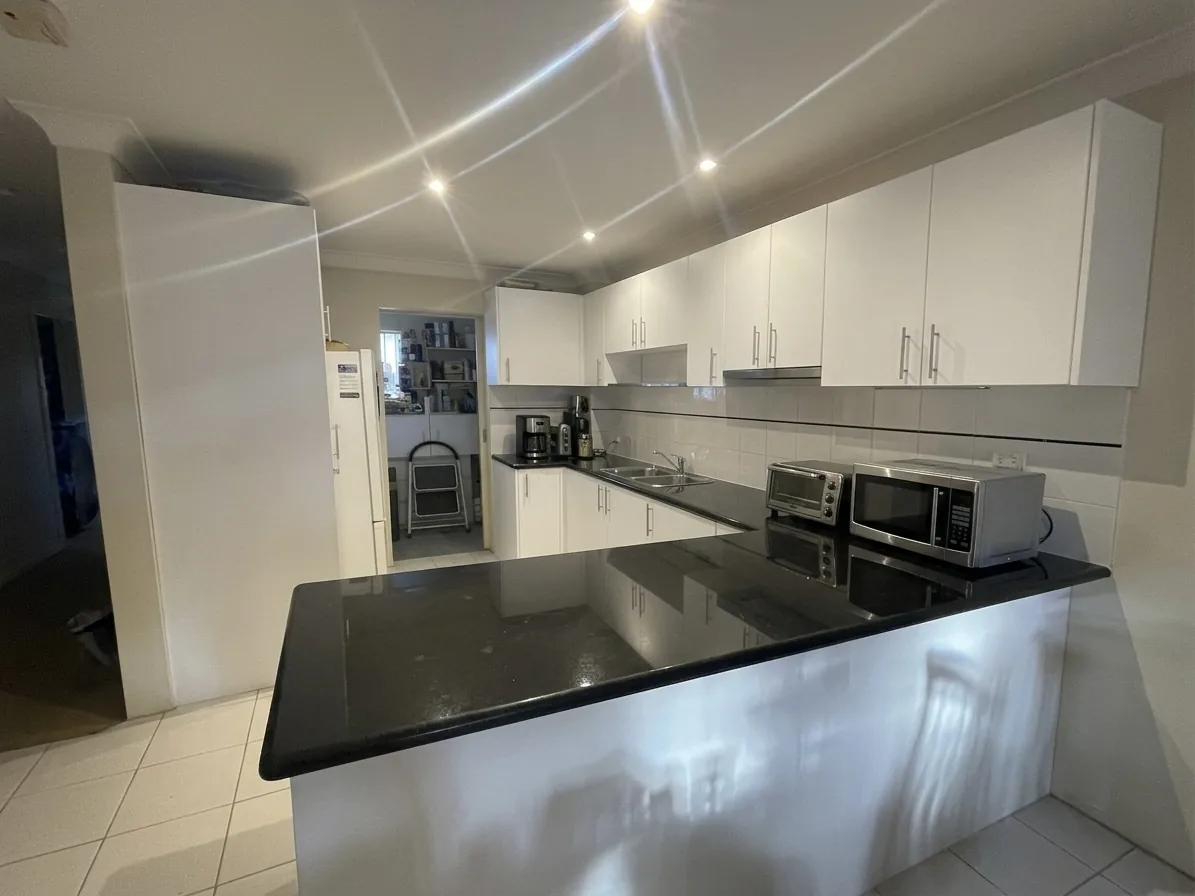
Resurfacing is the cheapest honest way to fix a dated kitchen that isn't actually broken. Here is what it costs in Sydney, what it does not cover, and the real numbers from an Alexandria apartment we finished for under $10,000.
TL;DR: Resurfacing refinishes the doors, drawer fronts and exposed panels over your existing carcasses, and keeps the benchtop, tiling and appliances. In Sydney in 2026 it runs about $6,000–$10,000 for an apartment kitchen and $10,000–$16,000 for a larger house kitchen. We did an Alexandria apartment kitchen for under $10,000 including GST, with nothing demolished and the kitchen usable the whole way through.
What Kitchen Resurfacing Actually Means
I'm a licensed contractor based in Liverpool, and resurfacing is the job people ask about when their kitchen looks tired but isn't falling apart. Resurfacing means we refinish or replace the parts you see — every door, drawer front and exposed panel — while the carcasses, the benchtop, the splashback tiling and the appliances all stay exactly where they are.
It is a step below a facelift. A facelift usually includes a new benchtop and splashback, which is most of why it costs more. A resurface deliberately leaves those alone, on the basis that a sound stone benchtop is worth keeping and there is no sense paying to replace something that still looks good.
That makes it the narrowest of the three options, and the cheapest. If your boxes are dry and square, your layout works, and your benchtop is in good condition, resurfacing gets you most of the visual change of a new kitchen for a fraction of the money. If any of those three is not true, it is the wrong job — and I would rather tell you that at the quote than halfway through. You can see the range of work on our kitchen renovations page.
What Kitchen Resurfacing Costs in Sydney
| Scope | Typical cost inc GST |
|---|---|
| Apartment kitchen — doors, fronts, panels and handles | $6,000–$10,000 |
| House kitchen — same scope, more cabinets | $10,000–$16,000 |
| Add cabinetry repairs or a rebuilt section | +$800–$2,500 |
| Add a new benchtop and splashback (now a facelift) | +$3,000–$7,000 |
Those are realistic Sydney ranges for 2026. What moves you inside a band is the door count and the finish. A modest apartment kitchen might have 18 to 22 faces; a house kitchen with a full tall run and an island can be double that, and the price follows the number of pieces more closely than anything else.
The finish is the other lever. Two-pack polyurethane on MDF costs more than a laminate or vinyl wrap door and is worth it in a kitchen, because it takes knocks and cleaning better and can be recoated years later. Profiled or shaker doors cost more to machine than flat board. Handles are minor money by comparison — chrome D-shapes are inexpensive, and they change the read of a kitchen more than most people expect.
Every quote we write is itemised, so you can see what the faces cost, what the hardware costs and what the labour costs, rather than one number at the bottom of a page. For the bigger picture, compare this against our facelift versus full renovation guide and our 2026 kitchen renovation cost guide.
A Real Example: An Alexandria Apartment Kitchen Under $10,000
The clearest way to explain resurfacing is a job we actually did. The kitchen was in an Alexandria apartment and it was structurally fine — good carcasses, a black stone benchtop in solid condition, tiling that was perfectly acceptable, and a layout that suited the unit. What let it down was the finish: the doors and panels were oak vinyl wrap that had aged badly and dated the whole room.
There was one extra problem. At some point the owner had cut into the cabinetry run beside the sink to squeeze in a small washing machine, then never ended up using it, so the run had a gap in it. That is the kind of thing a resurface has to deal with properly rather than paper over.
So we refinished every door, drawer front and exposed panel in 2pac polyurethane on MDF over the original carcasses, closed up and rebuilt the washer cavity so the run reads as one continuous line again, and fitted new chrome D-shape handles throughout. The benchtop, the splashback and the appliances did not move. Nothing was demolished, and the owner kept the use of the kitchen while we worked.
The whole job came in under $10,000 including GST. A full replacement of that kitchen would have started around $25,000, taken weeks longer, put the owner out of a kitchen, and thrown away a benchtop that was doing its job perfectly well. The full before-and-after set is on the Alexandria apartment kitchen resurface project page.
Where the Money Goes
It helps to know what you are paying for, because the split surprises people. On a resurface, the largest single line is usually the doors and panels — the sheet material, the cutting, the edging or the 45-degree machining, and then the finishing. Two-pack is a multi-stage process, and that labour is real.
The second line is fitting. Every replacement face has to match its opening exactly, which means measuring each opening rather than assuming the cabinetry was built to standard sizes. Older kitchens frequently were not. Hanging and adjusting the doors so every gap is even across a whole run takes longer than the hanging itself.
Third is hardware. Hinges and runners often get replaced at the same time, because it is a false economy to hang new fronts on twenty-year-old hinges that are already sagging. Handles sit here too.
Fourth is delivery and installation days on site. Then any repair work — a rebuilt section, a damaged base, a filler panel to suit an appliance — which is the line most likely to move between the quote and the job if something is hiding behind the old doors.
What you are not paying for is the whole reason resurfacing is cheap: no demolition, no waste removal, no plumbing, no electrical, no tiling, no stone. Take those out and a large part of a kitchen renovation budget disappears with them.
When Resurfacing Is the Wrong Answer
Resurfacing is good value when the kitchen deserves it, and a waste of money when it does not. There are three tests, and they are worth applying honestly before you get anyone in.
First, the carcasses. Open the doors and look at the base of the cabinets, especially under the sink. Swelling, soft board, or a musty smell means water has been getting in, and new fronts on failing boxes will fail with them. Cheap chipboard that is crumbling at the edges is the same story.
Second, the layout. If your real complaint is that there is nowhere to land a hot tray, the fridge sits in an awkward corner, or two people cannot work in there at once, resurfacing cannot help you. The boxes are not moving, so the layout is not changing. That needs a full renovation.
Third, the benchtop. Resurfacing assumes the benchtop stays. If the stone is chipped, badly stained or you have laminate you have already decided to replace, you are into facelift territory and should price it that way from the start rather than adding it on later.
There is also a fourth, softer test. If the kitchen has already been resurfaced once and the doors are the second set on those carcasses, look closely at the hinge fixings. Repeatedly re-drilling the same board eventually runs out of sound material to bite into.
Talk to us about resurfacing your kitchen
Resurfacing is the option I recommend more often than people expect, because a lot of Sydney kitchens — apartments especially — are dated rather than defective. If the boxes are sound, the layout works and the benchtop is worth keeping, refinishing the faces gets you a kitchen that reads as new for well under half the cost of replacing it, and without losing the use of the room.
We are a family-run, fully NSW-licensed team, and we build our doors and fronts to order, which is what a resurface needs — every opening measured, nothing assumed to be a standard size. If you would like a straight answer on whether your kitchen is a resurface, a facelift or a full renovation, give us a call on 02 5000 0402 for a free measure and quote. We are based in Liverpool and work right across Sydney.
Frequently asked questions
How much does it cost to resurface a kitchen in Sydney?
For an apartment kitchen, resurfacing typically runs $6,000 to $10,000 including GST in Sydney in 2026, covering every door, drawer front and exposed panel refinished over your existing carcasses, plus new handles. A larger house kitchen with more cabinets and a tall run usually sits between $10,000 and $16,000. The price tracks the number of faces more closely than anything else, then the finish — two-pack polyurethane costs more than laminate or vinyl wrap, and profiled or shaker doors cost more to machine than flat board. An Alexandria apartment kitchen we finished recently came in under $10,000 including GST, and that included closing up and rebuilding a section of the cabinetry run. We quote itemised so you can see the faces, the hardware and the labour separately.
What is the difference between kitchen resurfacing and a kitchen facelift?
They overlap, and the difference is the benchtop. Resurfacing refinishes or replaces the doors, drawer fronts and exposed panels only, and keeps the benchtop, splashback tiling and appliances exactly as they are. A facelift normally includes a new benchtop and usually a new splashback as well, which is why it costs several thousand dollars more and takes longer — stone has to be templated after the old top comes off, then fabricated off site. Both keep the existing carcasses and the existing layout, so neither one moves your sink, cooktop or power points. If your benchtop is in good condition, resurfacing is the sensible choice and you keep the money in your pocket. If the benchtop is chipped or stained, price a facelift from the start rather than adding it on midway.
Can you resurface kitchen cabinets without removing them?
Yes, and that is the whole point of the job. The carcasses stay screwed to your wall and floor throughout — we are only working on the faces. The doors and drawer fronts come off and are replaced with new ones finished in two-pack polyurethane on MDF, and exposed end panels and any visible cabinetry sides are done to match. Because nothing is being torn out, there is no demolition, no waste removal and no plumbing or electrical work, which is what keeps both the cost and the disruption down. In the Alexandria apartment we did, the owner kept the use of the kitchen the whole way through. The only part of that job that involved building anything was closing up a cavity a previous owner had cut into the run for a washing machine.
How long does kitchen resurfacing take?
Most resurfacing jobs are quicker than any other kitchen work we do, because there is no benchtop lead time and no other trades to coordinate. Expect a few days on site once the new fronts are ready, and the bulk of the calendar time to be the fabrication and finishing of the doors beforehand — two-pack polyurethane is a multi-stage finish and cannot be rushed without the result showing it. Unlike a facelift, there is no gap in the middle waiting on stone to be templated and made, and unlike a full renovation you are not without a kitchen for weeks. We will give you a clear schedule up front, including which days we will actually be in your home.
Is resurfacing worth it, or should I just replace the kitchen?
It depends entirely on the condition of the carcasses and whether the layout works. If the boxes are dry, square and solid, and you are happy with where the sink, fridge and cooktop sit, resurfacing is very good value — you get most of the visual change of a new kitchen for well under half the cost. If the cabinets are water-damaged, swollen at the base, or crumbling chipboard, new fronts will fail along with them and replacement is the honest answer. The same goes if the kitchen is genuinely laid out badly, because resurfacing cannot move a single cabinet. It is also worth thinking about how long you plan to stay: for an investment property or a shorter hold, resurfacing presents well without tying up full-renovation money. We inspect the carcasses properly when we quote and tell you which camp your kitchen falls into.
InsideOut Joinery & Renos is a family-run custom joinery and renovation business based in Liverpool, Sydney NSW 2170, serving homeowners Sydney-wide. Call 02 5000 0402 or email info@insideoutjoinery.au. One point of contact — we organise and manage every trade on your job, with quick turnaround and 12 years of experience. Licensed contractor — licence 383725C, ABN 62 912 909 739.