Built-in Wardrobes vs Freestanding: Which Is Right for Your Sydney Home?
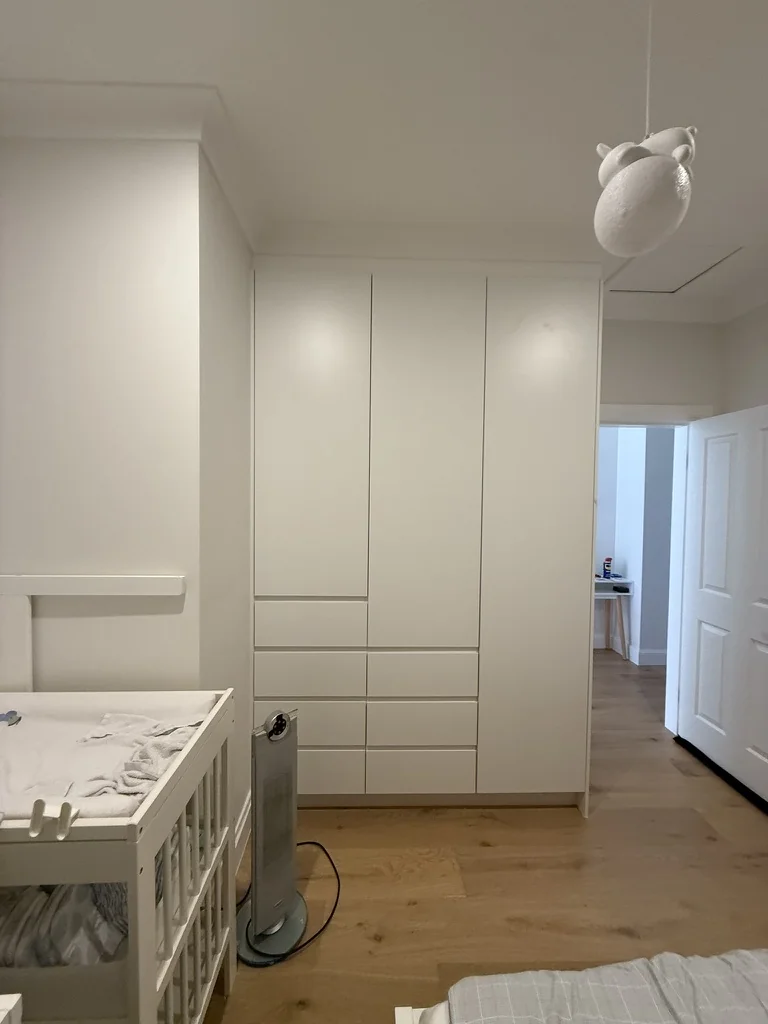
An honest comparison of built-in and freestanding wardrobes for Sydney homes — real pros, cons and costs, which adds value, and when freestanding genuinely makes more sense.
TL;DR: Built-in wardrobes make better use of space, add property value and look like they belong. Freestanding wardrobes cost less upfront and move with you. Which one is right depends on whether you own or rent, how long you are staying, and how much storage you actually need.
What Is the Difference
A built-in wardrobe is fixed to the room. It is built to the exact dimensions of the wall or alcove, runs floor to ceiling, and becomes part of the house — it stays when you sell. A walk-in wardrobe is a built-in taken to its full extent: a dedicated room or alcove fitted out with custom storage.
A freestanding wardrobe is a piece of furniture. You buy it assembled or as flat pack, stand it against a wall, and it moves with you when you go. Think of the difference the way you would a fitted kitchen versus a stand-alone cabinet: one is made for the space, the other is placed in it.
That single distinction — fixed versus furniture — drives everything else: cost, storage efficiency, how it looks, and whether it adds to the value of your home. The rest of this guide works through those trade-offs honestly so you can pick the right one for your situation rather than the one a retailer wants to sell you.
Built-in Wardrobes — Pros and Cons
The pros:
Space efficiency. A built-in uses the full height and width of the wall, including the awkward space above head height that a freestanding unit wastes. In a Sydney bedroom where every metre counts, that is the difference between enough storage and not enough.
Custom fit. It is built to your exact ceiling height, wall length and floor level — no gaps, no filler panels, no wobble. It also matches your storage split: the right ratio of hanging, drawers and shelving for what you actually own.
Property value. Built-in robes are a feature buyers look for in Sydney, and they stay with the home, so they add to its value.
Cleaner look. A built-in reads as part of the architecture rather than a box parked in the corner.
The cons:
Higher upfront cost than a flat-pack unit, because it is made to measure and installed. Permanent — it does not move with you, so it is an investment in the home, not a possession you take. And it needs a good installer; a built-in is only as good as the person who measures and fits it, so the trade matters.
Freestanding Wardrobes — Pros and Cons
The pros:
Lower cost. A flat-pack or pre-assembled freestanding wardrobe is the cheapest way to add hanging and shelf space — a few hundred dollars at the budget end.
Portable. It moves with you. For renters and people who relocate often, that is a genuine advantage — you are not paying to improve someone else's property.
No installation. You can have it the same day, assembled at home with basic tools, with no contractor and no waiting.
The cons:
Wastes space. A freestanding unit stops at a standard height, leaving dead space above it, and rarely fills the wall width exactly, leaving gaps on the sides. In a small Sydney room that lost space adds up fast.
Looks temporary. However good the finish, it reads as furniture placed in the room rather than part of it.
Limited configuration. You take the internal layout the manufacturer offers — a fixed rail and a couple of shelves — rather than a storage split built around your wardrobe. For most people that means a rail jammed full and folded clothes with nowhere sensible to go.
Cost Comparison for Sydney Homes
Here are realistic Sydney numbers.
Built-in wardrobe: A single-bedroom built-in runs roughly $2,500 to $6,000 depending on the width, the finish and the internal fitout — sliding or hinged doors, the number of drawers, soft-close hardware. A walk-in wardrobe fitout runs $4,000 to $12,000, and a larger U-shaped walk-in with premium finishes and integrated lighting can go higher again.
Freestanding wardrobe: $300 to $2,000 from flat-pack and furniture retailers, depending on size and quality.
The price gap is real, and it is worth understanding why it exists. A built-in is measured, designed, cut to your exact room, fitted with quality runners and hinges, and installed level and fixed by a tradesperson. A freestanding unit is mass-produced to standard sizes, flat-packed, and assembled by you. You are comparing made-to-measure joinery with off-the-shelf furniture. Neither is wrong — but they are not really the same product, and the cheaper one solves a different problem.
Which Adds More Value to a Sydney Property
Built-in wardrobes add to property value; freestanding wardrobes do not. This is one of the clearest distinctions of the two.
A built-in robe is a fixture — it stays with the home and forms part of what a buyer is paying for. In the Sydney market, built-in or walk-in robes in the main bedrooms are something buyers actively look for, and their absence is something they notice. Bedrooms listed as "built-in robes" simply present better and remove a small objection at inspection.
A freestanding wardrobe leaves with you when you move, so it adds nothing to the sale. It was a possession, not an improvement.
That does not mean a built-in pays for itself dollar-for-dollar — few individual features do — but in an owner-occupied Sydney home you plan to stay in, a well-built robe earns its place through years of better daily storage and a stronger position at resale. If you are renovating with one eye on selling, built-in robes in the bedrooms are a sensible, broadly appealing spend.
When Freestanding Makes Sense
Built-in is not always the right answer. Freestanding genuinely makes more sense in a few situations.
Renters. If you do not own the property, do not pay to improve it. A freestanding wardrobe gives you the storage now and comes with you when the lease ends. Most landlords will not allow built-ins anyway.
Short-term stays. If you expect to move within a year or two, the cost of a built-in is hard to justify when you will not be there to enjoy it or capture it at sale.
Budget constraints. If the money genuinely is not there right now, a freestanding unit is a sensible interim solution. There is no shame in it — just be clear it is a stop-gap, not the finished result.
Heritage homes. In some heritage-listed or character properties, cutting into walls or fixing joinery is restricted or undesirable. A quality freestanding piece, or a built-in designed to sit within the room without altering protected fabric, can be the right call. If you own the home and plan to stay, though, a built-in almost always wins on space and value — see our walk-in wardrobe ideas for what is possible, or our wardrobes page for how we build them.
Frequently asked questions
Are built-in wardrobes worth it in a Sydney apartment?
Usually yes, because apartments are where space is tightest and a built-in claws back the most. A built-in uses the full ceiling height and wall width, including the dead space a freestanding unit leaves above and beside it, which matters enormously in a compact apartment bedroom. It also adds to the value of the apartment as a fixture buyers look for. The main things to check are whether your strata by-laws require approval for fixed joinery and whether the wall construction suits fixing — both are easy to confirm before you commit, and we can advise on it.
How long do built-in wardrobes take to install?
The installation itself is usually one to three days on site depending on the size and complexity of the fitout. The full timeline from first measure to finished wardrobe is typically three to five weeks, which covers confirming the design, fabricating the cabinetry to your exact dimensions, and scheduling the install. If the wardrobe is part of a broader bedroom or whole-home renovation, we coordinate it within that scope so it lands at the right stage. The on-site disruption is minimal — a built-in robe is one of the quicker, cleaner joinery jobs once the planning is locked in.
Can I get a built-in wardrobe in a rental property in Sydney?
Generally not without the owner's permission, and most landlords will not allow fixed joinery to be added or altered. A built-in is a permanent fixture that stays with the property, so as a tenant you would be paying to improve someone else's asset with no return when you leave. For renters, a quality freestanding wardrobe is almost always the right answer — it gives you the storage now and moves with you. If you own the property and lease it out, adding built-in robes can lift both rental appeal and resale value, so the calculation is different for owners.
What material is best for built-in wardrobes in Sydney?
Melamine is the most common and cost-effective finish — durable, easy to clean, and available in a wide range of colours and timber looks, which makes it the standard choice for a clean contemporary robe. Polyurethane is a step up in finish quality and cost, with a smoother surface and more colour options, suited to wardrobes you want to feel premium. Timber veneer brings genuine warmth and suits older homes where a flat white would look cold. Whatever the door finish, the hardware matters most day to day — quality soft-close hinges and drawer runners are what make a wardrobe feel good to use for years.
How do I get a built-in wardrobe quote from InsideOut Joinery?
Send us a few photos of the bedroom or alcove, rough measurements or a floor plan, and a short note on how much hanging, drawer and shelf space you need. From that we can give you a realistic budget range quickly. For a detailed quote we will measure up and confirm the layout, finishes and internal configuration with you before anything is built. Call us on 02 5000 0402 or use the contact form. We are family-run, Liverpool-based and work Sydney-wide, and there is no obligation to proceed once you have the quote.
InsideOut Joinery & Renos is a family-run custom joinery and renovation business based in Liverpool, Sydney NSW 2170, serving homeowners Sydney-wide. Call 02 5000 0402 or email info@insideoutjoinery.au. One point of contact — we organise and manage every trade on your job, with quick turnaround and 12 years of experience. Licensed contractor — licence 383725C, ABN 62 912 909 739.