Kitchen Renovation Ideas for Sydney Homes
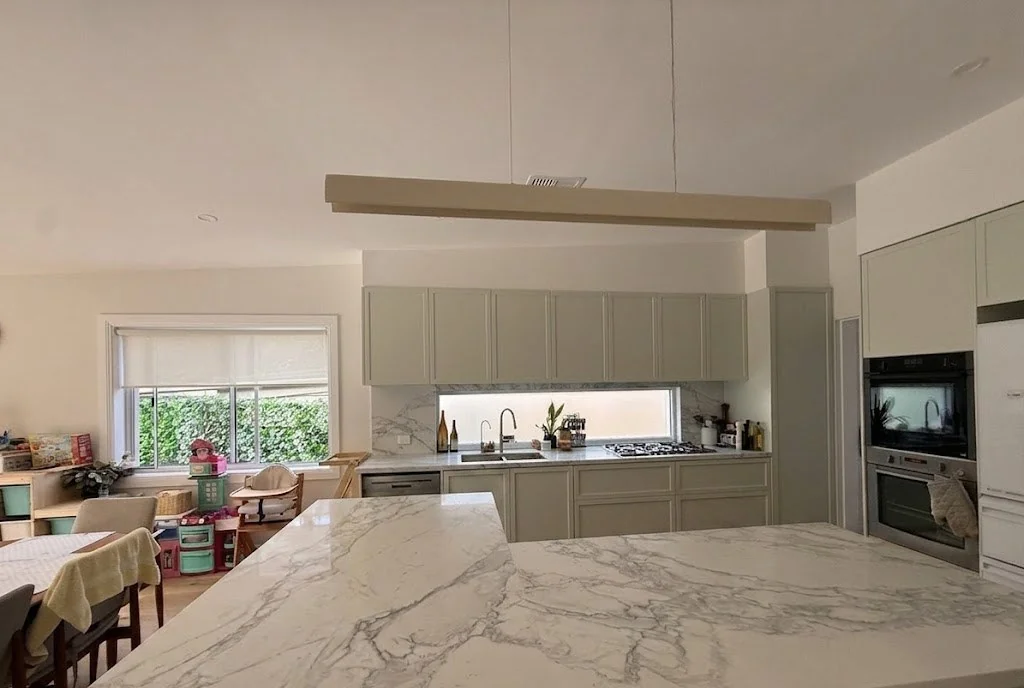
Practical kitchen renovation ideas for Sydney homes — layouts, cabinetry, benchtops, storage and splashbacks that actually work, plus honest advice on where to spend and where to save.
TL;DR: The best kitchen renovations in Sydney combine a layout that works for how you cook, storage you will actually use, and finishes that suit the home. Here are the ideas that come up most often in our projects.
Layout Ideas That Work in Sydney Homes
The layout matters more than any finish. Get it right and the kitchen works every day; get it wrong and no benchtop colour will save it.
Galley: Two parallel runs of bench. Efficient and quick to cook in because everything is within reach. It suits Inner West terraces and semi-detached homes where the kitchen is long and narrow. The trick is keeping at least 1 metre of clear floor between the runs so two people can pass.
L-shape: The most flexible layout for Sydney homes. Two connected runs open the kitchen to a dining or living area, which suits open-plan apartments and suburban family homes. It leaves room for a small table or a single-bench island.
U-shape: Three runs of bench give maximum storage and workspace. It works in larger family kitchens where there is width to spare, but it can feel closed-in if the room is small.
Island: The one everyone wants. An island adds bench space, casual seating and a social hub — but only if the room can spare 1 metre of clearance on every side. In a tight terrace kitchen, a peninsula off an L-shape often does the same job without choking the floor. Be honest about the room's size before committing to an island.
Cabinet and Joinery Ideas
Cabinetry sets the character of the kitchen and is where quality shows over time.
Shaker doors suit period homes, Federation semis and anywhere with traditional detailing. Flat panel reads clean and contemporary and works almost everywhere. Handleless profiles — with a routed finger pull or a J-pull — give a sleek look that suits open-plan living, though they cost a little more to make.
Two-tone cabinetry is everywhere right now: a darker or timber-look base with lighter overheads, or a contrasting island. Done with restraint it adds warmth without looking busy. Floor-to-ceiling cabinetry is one of the best uses of a Sydney kitchen wall — it removes the dust-collecting bulkhead gap and adds serious storage. Integrated appliances — a panelled dishwasher and fridge — keep the run looking like joinery rather than a showroom of stainless steel.
Real finishes worth knowing: Laminex Chalk in a matt finish is a popular soft neutral; Polytec ranges cover timber-look and solid colours at a sensible price; 2-pac painted (two-pack polyurethane) is the most durable painted finish and the one to choose for doors you want to last; and timber veneer brings genuine warmth where a flat colour would feel cold. We will tell you honestly which finish suits the room and the budget.
Benchtop Ideas for Sydney Kitchens
The benchtop is the surface you touch most, so it is worth getting right.
Engineered stone (Caesarstone, Silestone): Still the most popular choice for the look and the hard-wearing surface. Note that since the 2024 ban on high-silica engineered stone, the industry has shifted to low- and zero-silica products — your supplier should confirm what they are quoting. Expect a meaningful share of a mid-range kitchen budget to go here.
Porcelain: Now a mainstream alternative to stone. Heat-resistant, UV-stable and available in large-format slabs and convincing stone looks. Excellent for a kitchen that opens to an outdoor area.
Laminate: The honest budget option. Modern laminate looks far better than it used to and is a strong result when the budget is better spent on layout or cabinetry. It will not take a hot pan and the edges can show wear over years, but for the price it is hard to beat.
Timber: Warm and characterful, good for an island or a section of bench, but it needs oiling and is not ideal around the sink. Best used as a feature rather than the whole kitchen.
Storage Ideas That Actually Work
Storage is where a custom kitchen earns its money, because it is built around what you actually own.
Deep drawers instead of doors for the base cabinets. You can see and reach everything without crouching into the back of a cupboard. Pot drawers under the cooktop are far more usable than a low door.
Pull-out bins built into a cabinet keep rubbish and recycling out of sight and off the floor. A two- or three-bin system is one of the most appreciated small details in any kitchen.
Corner options: Corners are dead space in most kitchens. A LeMans unit or a well-designed corner drawer turns the awkward corner into proper storage rather than a black hole.
Pantry design: A walk-in pantry if the room allows, or a tall pull-out pantry if it does not. Either keeps the bench clear and the dry goods visible. A butler's pantry is worth it in a family kitchen that entertains.
Overhead storage to the ceiling: Taking cabinetry to ceiling height removes the bulkhead gap and adds a full extra shelf of storage for the things you reach for twice a year. Pair it with internal lighting and the top shelves stay usable.
Splashback Ideas
The splashback protects the wall and pulls the kitchen together, and there is no single right answer.
Tile is the classic. Subway tiles are timeless and cheap; a feature tile or a handmade zellige adds character. The trade-off is grout lines, which need occasional cleaning and the right sealing to stay looking sharp.
Glass gives a smooth, wipe-clean surface in any colour with no grout. It is more expensive and has to be templated and toughened, but it is excellent behind a cooktop where splatter is constant.
Stone continuation — running the benchtop material up the wall — is the premium look. It is clean and grout-free and ties the kitchen together, but it adds material cost.
Painted wall is the budget-friendly option behind low-splash areas, finished in a washable enamel. It will not survive directly behind a gas cooktop, but it is perfectly sensible elsewhere. For maintenance, glass and stone are the easiest to keep clean; tile looks great but asks a little more of you over the years.
What Renovation Ideas Are Worth the Money
After twelve years of kitchens, here is where the money actually counts.
Spend on the layout. Moving a sink, adding an island that fits, or reconfiguring a cramped galley changes how the kitchen feels every single day. This is the one thing you cannot easily fix later, so it deserves the budget.
Spend on the benchtop. It is the most-used surface and the one most visible. A quality stone or porcelain top lifts the whole room and lasts decades.
Spend on storage and hardware. Deep drawers, soft-close runners and proper corner options are used thousands of times a year. Cheap runners are the first thing to fail and the first thing you notice.
Save on handles — a simple, well-chosen handle looks better than an expensive fussy one, and they are easy to upgrade later. Save on paint colours — a neutral that does not date beats a bold colour you tire of, and repainting is cheap. Save on lighting placement by keeping it simple: good task lighting over the bench and even ceiling light does more than a complicated scheme. For real budget numbers across each level, see our kitchen renovation cost guide, or look at how we plan kitchens on our kitchens page.
Frequently asked questions
What kitchen style suits a Sydney terrace home?
Terrace kitchens are usually long and narrow, so a galley or a single-run layout with tall storage works best. Shaker or flat-panel doors suit the period detailing of most terraces, and a lighter colour keeps a tight room feeling open. Take cabinetry to the ceiling to claw back storage, and skip a full island — there is rarely room for the clearance it needs. A peninsula or a slim moveable bench gives you the extra surface without choking the walkway. The key is making every centimetre work, which is exactly where custom cabinetry beats flat pack.
What is the most popular kitchen colour in Sydney right now?
Warm neutrals are dominating Sydney kitchens — soft whites, chalky off-whites, mushroom and warm greys, usually paired with a timber-look element for warmth. Two-tone schemes are common: a timber or darker base with lighter overheads, or a contrasting island in a deeper colour like forest green or charcoal. Matt finishes are favoured over high gloss. The reason these stay popular is simple — they do not date quickly and they suit the natural light in most Sydney homes. If you are renovating to sell, a warm neutral is the safe, broadly appealing choice.
How do I make a small Sydney kitchen feel bigger?
Light, continuity and clever storage do the heavy lifting. Use a lighter cabinet colour, keep the benchtop and splashback in similar tones to avoid visual breaks, and take cabinetry to the ceiling so the eye reads height. Handleless or slim-profile doors keep the runs clean and uncluttered. Integrated appliances stop the room looking like a wall of stainless steel. Good lighting under the overheads makes the bench feel open rather than shadowed. And ruthless storage — deep drawers, a pull-out pantry, corner options — keeps the bench clear, which is what actually makes a small kitchen feel bigger.
Should I change my kitchen layout when renovating?
Only if the current layout genuinely does not work. If the sink, cooktop and fridge form a sensible working triangle and you just want it to look better, keeping the layout saves real money by avoiding plumbing and electrical relocation. But if you are constantly walking around the room to cook, short on bench space, or the storage is in the wrong place, fixing the layout is the single most valuable thing you can do. A renovation is the one chance to correct it without a second disruption. We will give you a straight answer on whether your layout is worth changing.
What kitchen features add the most value to a Sydney home?
A sensible, modern layout matters most — buyers feel a kitchen that works even if they cannot name why. After that, a quality stone or porcelain benchtop, good storage including a pantry, and integrated or quality appliances read as a well-finished kitchen. Neutral, current finishes appeal to the widest pool of buyers. An island adds value where the room genuinely fits one. What does not add value is over-personalising with bold colours or premium finishes the suburb will not support. Spend on layout, benchtop and storage, keep the finishes broadly appealing, and the kitchen helps the sale.
InsideOut Joinery & Renos is a family-run custom joinery and renovation business based in Liverpool, Sydney NSW 2170, serving homeowners Sydney-wide. Call 02 5000 0402 or email info@insideoutjoinery.au. One point of contact — we organise and manage every trade on your job, with quick turnaround and 12 years of experience. Licensed contractor — licence 383725C, ABN 62 912 909 739.