The Best Kitchen Benchtop Materials for Sydney Homes
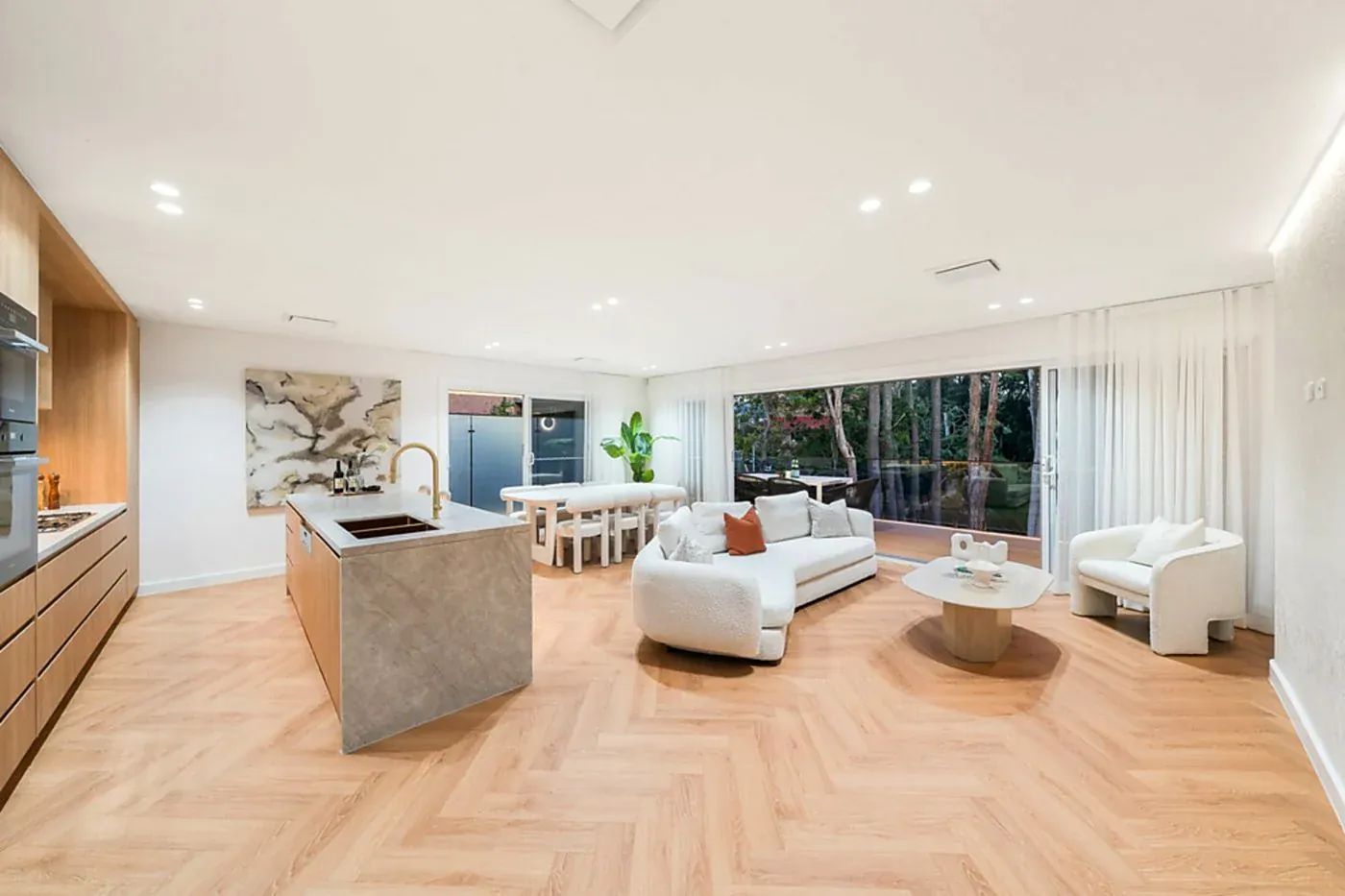
Stone, laminate, timber, porcelain or concrete? An honest comparison of kitchen benchtop materials for Sydney homes — real costs per linear metre, durability, maintenance and resale value.
TL;DR: Stone (Caesarstone or Silestone) is the most popular benchtop in Sydney kitchens for good reason — durable, low maintenance, strong resale value. Laminate is the budget choice. Timber looks great but needs maintenance. Porcelain is rising fast.
Engineered Stone (Caesarstone, Silestone, Quantum Quartz)
Engineered stone has been the default benchtop in Sydney kitchens for over a decade, and it's easy to see why. I'm a licensed contractor based in Liverpool, and across twelve years engineered stone is the material I've installed more than any other. It runs roughly $300 to $600 per linear metre installed, sits hard-wearing and non-porous, resists scratches and stains, and needs almost no maintenance — a wipe down is the whole routine. The watch-outs are real but manageable: it can scorch under a hot pan, strong acids can etch it, and prolonged direct UV can fade some colours near a sunny window.
There's a bigger consideration you need to know about, though. From 2024 the manufacture, supply and fabrication of engineered (silica) stone benchtops is prohibited in Australia, because cutting it produced fine silica dust that caused silicosis in stone workers. That's a genuine health reason, not red tape. The good news is the industry has moved fast — low-silica engineered stone and porcelain alternatives now give you the same look and durability without the banned product. If you're choosing today, ask your contractor for a compliant low-silica or porcelain option. You can see the kitchens we build on our kitchen renovations page.
Laminate Benchtops
Laminate is the budget choice, and modern laminate is far better than the chipped, peeling benchtops people remember from the 90s. It runs roughly $80 to $200 per linear metre installed, which makes it the cheapest real benchtop on the market by a wide margin.
The quality has genuinely jumped. The best modern laminates from brands like Laminex and Polytec come in convincing stone and timber-look finishes, with squared edges instead of the old rounded postformed profile, so from a step back many people can't pick it from stone.
Where does it make sense? In a rental, a granny flat, a laundry, a budget-conscious first kitchen, or anywhere you expect to redo the kitchen again in five to ten years. Where doesn't it? In a forever home or a higher-end renovation where buyers expect stone. Laminate's limits are the seams, which can let water in if damaged, and heat — a hot pan will scorch it permanently. Treat it well and a modern laminate top lasts years and looks sharp doing it.
Timber Benchtops
Timber brings a warmth no manufactured surface quite matches, and in the right kitchen it looks superb. It runs roughly $300 to $700 per linear metre installed depending on the species and finish. The trade-off is maintenance — timber is a natural material that moves, marks and reacts to water.
You need to oil a timber benchtop, often every few months at first and then once or twice a year, to keep it sealed and looking right. It's sensitive to standing water, so it doesn't love sitting around a sink or dishwasher unless it's very well finished and you're diligent. Heat and knives mark it too, though for some people that lived-in patina is part of the appeal.
Hardwood beats softwood here. A dense Australian hardwood like blackbutt or spotted gum handles daily kitchen life far better than a soft pine, which dents and stains easily. Where timber works best is as a feature — an island top, a breakfast bar, or a run away from the wet zone — paired with a harder surface around the sink. Used that way, it gives a kitchen real character without the full maintenance headache.
Porcelain Slabs
Porcelain is the fastest-growing benchtop in Sydney kitchens right now, and the engineered stone ban has only pushed it harder. It runs roughly $400 to $800 per linear metre installed and, on performance, it's hard to beat. Porcelain is highly resistant to heat — you can genuinely put a hot pan straight on it — along with scratches, stains and UV, so it won't fade in a sunny kitchen. It comes in convincing stone, concrete and marble looks, and because it's a fired ceramic it has none of the silica health issues that ended engineered stone.
It isn't perfect, though. Porcelain slabs are relatively thin and hard, which makes them more brittle at the edges — they can chip on a sharp knock, especially around sink cut-outs and corners. Fabrication needs a specialist with the right tooling, so not every stonemason handles it well, and edge profiles are more limited than with stone. The slabs are also heavy and awkward to handle on site. Choose an experienced fabricator and porcelain is one of the most durable, lowest-maintenance benchtops you can put in a Sydney kitchen today.
Concrete Benchtops
Concrete is a niche choice, but in the right home it makes a real statement. It suits industrial, warehouse and contemporary kitchens, and because each top is cast it can be made to almost any shape, with integrated sinks and drainboards if you want them. It runs roughly $500 to $1,000 or more per linear metre, since it's largely a hand-made, custom product.
The two things to understand are sealing and cracking. Concrete is porous, so it must be sealed properly and resealed over time, or it will stain from oil, wine and citrus. Even sealed, it can develop fine hairline cracks as it cures and as the house moves — for some owners that's part of the raw, organic character; for others it's a flaw they can't live with. It also stains and etches more readily than stone or porcelain.
Concrete is for the homeowner who wants a one-off look and accepts a bit of patina and upkeep as the price of it. If you want a fit-and-forget surface, it isn't the one. If you want something genuinely individual and you'll maintain it, it can be the heart of a striking kitchen.
Which Benchtop Adds the Most Value to a Sydney Home
If resale is on your mind, the answer is consistent across Sydney: a quality stone-look benchtop is the safe choice. Buyers walking through an open home expect to see stone or a stone-equivalent porcelain in a renovated kitchen, and a laminate top — however good the modern ones are — can read as a budget kitchen to a buyer comparing several homes in a weekend.
That doesn't mean you must spend big. A mid-range low-silica engineered stone or a porcelain slab hits the expectation without premium pricing, and either reads as the durable, low-maintenance surface buyers want. Porcelain in particular carries a slightly premium, current feel that's working well in the Sydney market right now.
Timber and concrete are more polarising. They photograph beautifully and the right buyer loves them, but they narrow your audience and some buyers see maintenance rather than charm. If you're renovating to sell, lead with stone or porcelain and use timber as a feature accent at most. If you're staying, choose what you'll love — you're the one living with it. For the full picture on what a kitchen costs, read our kitchen renovation cost guide.
What to Ask Your Contractor Before Choosing
Before you sign off on a benchtop, run through a short list with your contractor — these details change both the look and the price. First, thickness. A 20mm slab is sleek and modern; a 40mm built-up edge looks more substantial and traditional. Decide which suits the kitchen.
Ask about edge profiles. A simple square or pencil-round edge is standard; a mitred edge or a more detailed profile costs more in fabrication. Then talk overhang — an island breakfast bar with a generous overhang needs support brackets or a thicker slab so it won't flex or crack.
Sink mounting matters too. An undermount sink sits below the bench for a clean wipe-down and suits stone and porcelain; a topmount drops in from above and is cheaper but catches crumbs at the rim. Discuss waterfall edges if you want the slab to run down the sides of the island — they look great but use more material and add cost.
Finally, ask about the splashback. Running the same material up the wall behind the cooktop ties the kitchen together but adds cost. We handle all of this as one team — design, joinery, stone and install through us — so the benchtop, cabinets and splashback are coordinated from one fixed-price quote.
Talk to us about your kitchen
If you're weighing up benchtops for a kitchen renovation anywhere in Sydney, the easiest first step is a chat. Call us on 02 5000 0402, or send through your plans and a few photos and we'll come back with a free quote and a clear, itemised scope. We're family-run, licensed, and we've spent twelve years putting benchtops into Sydney kitchens — so we'll give you an honest steer on what suits your home and your budget, not a sales pitch. Liverpool-based and working right across Sydney.
Frequently asked questions
What is the most popular kitchen benchtop in Sydney?
Engineered stone has been the most popular kitchen benchtop in Sydney for over a decade, valued for its durability, low maintenance and strong resale appeal. However, from 2024 the manufacture and fabrication of high-silica engineered stone is prohibited in Australia on health grounds, so the market has shifted to low-silica engineered stone and porcelain slabs, which deliver the same stone look and performance without the silicosis risk. For most Sydney homeowners renovating today, a low-silica engineered stone or a porcelain slab is the popular, safe choice — durable, easy to clean, and exactly what buyers expect to see in a renovated kitchen.
How thick should a stone benchtop be in a Sydney kitchen?
The two standard options are a 20mm slab and a 40mm built-up edge. A 20mm benchtop gives a sleek, modern, minimal look and is common in contemporary Sydney kitchens. A 40mm edge — usually two layers mitred together — looks more substantial and traditional, and reads as more premium to some buyers. Neither is stronger in normal use; it's mainly an aesthetic choice. On an island with a breakfast bar overhang, though, a thicker edge or proper support brackets help prevent flex and cracking. Talk it through with your contractor so the thickness suits both the style of the kitchen and how the island is used.
Can I install a stone benchtop myself in Sydney?
No — stone and porcelain benchtops should always be templated, cut and installed by a professional fabricator, not as a DIY job. The slabs are extremely heavy, easy to crack, and need precise cutting for sink cut-outs, cooktop openings and edge profiles using specialist tooling. A bad cut or an unsupported span can crack a slab worth thousands, and porcelain in particular is brittle at the edges and unforgiving to handle. There's also the health angle: cutting stone produces hazardous dust that must be managed with proper equipment. Leave benchtop fabrication and installation to a qualified specialist — we coordinate the templating, fabrication and install as part of the kitchen.
What benchtop material is best for a Sydney rental property?
For a rental, modern laminate is usually the smartest choice. At roughly $80 to $200 per linear metre installed, it's the most affordable real benchtop, and today's stone-look and timber-look laminates from brands like Laminex and Polytec look sharp and wear well under tenant use. You get a presentable kitchen without tying up capital in premium stone that tenants won't pay extra rent for. If the property is at the higher end of the rental market, a budget low-silica engineered stone can be worth it for the lift in appeal. For most standard rentals, though, a quality laminate gives you the best return on every dollar spent.
How long does a benchtop installation take?
The benchtop itself is usually installed in a single day once it has been fabricated, but the full process takes longer. After your cabinets are in, the fabricator templates the benchtop to the exact measurements, then it goes to the workshop for cutting and edging, which typically takes one to two weeks for stone or porcelain. On install day the slabs are placed, joined and sealed, and the sink and cooktop cut-outs are fitted. You generally need to wait a short while before heavy use so any sealant or adhesive cures. We schedule the template and install around the rest of the kitchen so the whole job stays on our roughly three-week turnaround.
InsideOut Joinery & Renos is a family-run custom joinery and renovation business based in Liverpool, Sydney NSW 2170, serving homeowners Sydney-wide. Call 02 5000 0402 or email info@insideoutjoinery.au. One point of contact — we organise and manage every trade on your job, with quick turnaround and 12 years of experience. Licensed contractor — licence 383725C, ABN 62 912 909 739.