Wardrobe Door Options Sydney: Hinged, Sliding, and Cavity — What Works Where
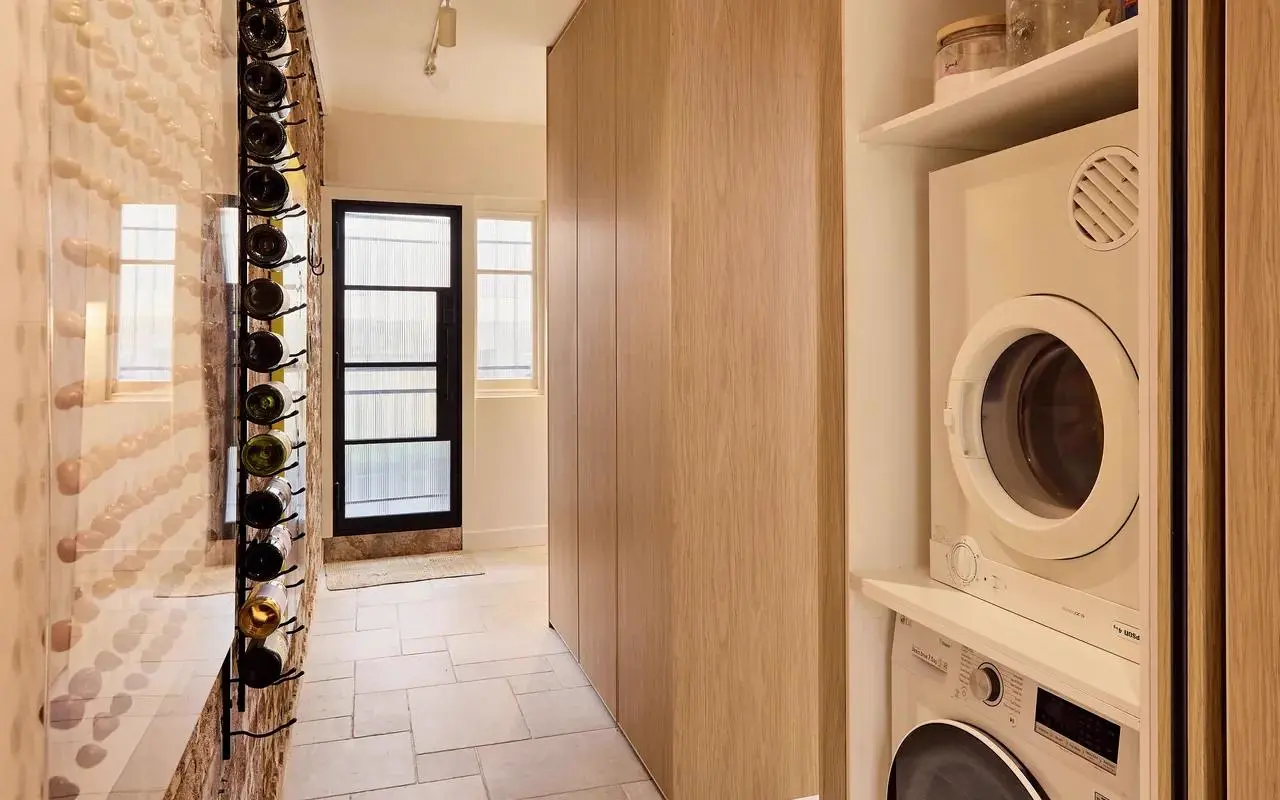
The door type you choose for a built-in wardrobe affects how much of the internal space is accessible at one time, how much floor space the doors use, and how the room feels. Here is a clear comparison.
TL;DR: Hinged doors: full bay access, need 600mm+ swing clearance. Sliding doors: no clearance needed, but only one bay accessible at a time. Cavity sliding: cleanest finish, disappears into wall, requires wall construction. For ceiling height runs (2,400mm+), all door types work — but tall hinged doors need 4 hinges minimum and a quality brand. For tight rooms, sliding wins.
Hinged Wardrobe Doors
Hinged doors open outward on hinges fixed to the carcass. They are the most common door type for built-in wardrobes in Sydney homes.
Advantages. Full access to the entire bay width when open. No track on the floor. The simplest construction — no hardware beyond hinges and soft-close dampers. Easiest to repair or adjust. Any profile works — flat, shaker, slim shaker.
The constraint. Hinged doors need clear floor space equal to the door width in front of the wardrobe. A 600mm wide bay with a hinged door needs 600mm of clearance in front of it to open fully. In bedrooms where the bed is close to the wardrobe, this is often the limiting factor.
Door heights and hinge count. Standard hinge count by door height:
- Up to 900mm: 2 hinges
- 901–1,500mm: 3 hinges
- 1,501–2,400mm: 4 hinges
- Over 2,400mm: 5+ hinges
For ceiling-height wardrobe doors (2,400–3,100mm), 4 hinges are the minimum. Quality hinges (Blum, Hettich) are worth specifying for tall heavy doors — cheap hinges sag within 12 months under the weight.
Door pairs vs single doors. A 900mm wide bay can have one door (900mm wide) or two doors (450mm each). Two doors per bay is more practical — each door is lighter, requires less clearance to open, and puts less stress on hinges. One door per bay is cleaner in appearance but heavier and requires more swing space.
Cost. Hinged door hardware is the cheapest of the three systems. A standard Blum hinge pair with soft-close: $25–$40 per door. This is why hinged doors are almost always the lowest-cost option when clearance is available.
Sliding Wardrobe Doors
Sliding doors move on a track — fixed to the top of the frame (top-hung) or running on a floor track (bottom-rolling). They are the most common solution for bedrooms where hinged door clearance is not available.
Advantages. No clearance needed in front of the wardrobe — the doors slide parallel to the wardrobe face. Can be made very large (single panels up to 3,000mm tall are achievable with quality hardware). Contemporary appearance.
The constraint. With sliding doors, only half the wardrobe width is accessible at one time. On a 1,800mm wide wardrobe with two sliding doors, you can access 900mm at any given moment — the other 900mm is behind the door that is in front of it. This means internal fitout needs to account for which half of the wardrobe you access most often.
Top-hung vs bottom track. Top-hung systems (track at the top only, no floor track) are the premium option. There is no floor track to trip over and the system looks cleaner. Bottom-rolling systems are cheaper and more stable for very wide panels. For a standard bedroom wardrobe, top-hung is the better choice.
Panel material and weight. Sliding door panels can be MDF (heavy, paintable), glass (light, modern), mirror (adds visual space to small bedrooms), or timber veneer. Mirror panels are a practical choice — the room looks larger and you gain a full-length mirror without a separate fixture.
Track quality matters. Cheap sliding door tracks wear within 2–3 years under daily use. Hettich and Hafele make quality systems rated for 100,000 cycles. Specify the hardware brand in the quote and verify it.
Cost. Sliding door systems cost more than hinged in hardware terms — typically $300–$800 per linear metre of track system depending on brand and panel count. The overall cost difference compared to hinged doors depends on panel material (mirror panels are more expensive than painted MDF).
Cavity Sliding Doors
Cavity sliding doors disappear into the wall when open. The door slides inside a built cavity in the wall, leaving the opening completely clear.
Advantages. Cleanest visual result — no visible door, no track, no frame when open. Full access to the wardrobe with no door in the way. Ideal for walk-in wardrobes where the door leads into a dedicated space.
The constraint. Cavity doors require a wall built to accommodate them. The wall cavity needs to be at least as wide as the door panel, and the wall construction must be robust enough to house the track and door without flexing. This adds construction cost — a cavity door system typically requires a new wall or modification of an existing one.
Where cavity doors make sense:
- Walk-in wardrobe entries
- Wardrobe rooms where the visual result matters significantly
- Renovations where wall construction is already being done (adding it to existing wall work is far cheaper than doing it separately)
Hardware. The Hafele Slido range and similar systems are designed for cavity installation. Track is fixed inside the wall cavity. Soft-close is available on most quality systems.
Cost. Cavity door hardware: $400–$900 per door depending on size and brand. Wall construction cost: $800–$2,500 depending on complexity. Total for a single cavity sliding wardrobe entry: $1,500–$4,000 including hardware and construction. Worth it when the visual result is a priority.
Door Profiles: Flat, Shaker, and Slim Shaker
Once you have chosen the door type (hinged or sliding), the next decision is the profile — the surface detail on the door face.
Flat (plain) doors. No surface detail. Contemporary, clean. Works well with handleless designs (integrated grip or J-pull). The cheapest option from a manufacturing perspective — standard 18mm MDF, cut to size, painted. Most popular for sliding doors where the detail is less visible at distance.
Standard shaker (60mm profile). The most popular profile for built-in wardrobes in Sydney. A recessed panel within the door, framed by a 60mm flat border. The classic look works with both contemporary and traditional interiors. Standard shaker is 18mm MDF with a machined profile — adds $100–$130 per sheet to door costs.
Slim shaker (20mm profile). A narrower recessed panel, more refined appearance. Requires 21mm MDF (not 18mm) for hinge clearance on the back. More expensive than standard shaker — adds $120–$150 per sheet. Suits contemporary interiors where the detail needs to be there but subtle.
Timber veneer. Real timber veneer on an MDF substrate. Beautiful, natural grain. Requires more careful finishing and maintenance than painted MDF. Used in premium wardrobes where a warm material is specified.
Colour. For painted doors, the colour is applied after manufacturing by a spray painter. Colour choice is almost unlimited. Satin or eggshell finish is standard for interior joinery — full gloss reads every mark and is not recommended for wardrobes. White is the most popular choice in Sydney bedrooms. Darker colours (charcoal, navy) are used where contrast is the brief.
Choosing the Right Door Type for Your Room
The decision tree for Sydney bedrooms:
If your bed is within 600mm of the wardrobe: Choose sliding or cavity. There is not enough clearance for hinged doors to open properly.
If you have a walk-in wardrobe: Choose cavity sliding or hinged. Sliding doors on a walk-in entry work but look less finished than a cavity solution.
If the room is long and narrow (wardrobe on one long wall, bed on the other): Sliding doors are the practical choice. The door panels stay parallel to the wardrobe and do not reduce the room width.
If you want full-width access to the wardrobe at one time: Hinged doors. Sliding doors always block part of the wardrobe.
If the room has ceiling height over 2,700mm: All door types work but hinged doors of that height are heavy and require quality hardware. Top-hung sliding panels scale to any height more easily.
If the internal configuration uses full-height rails and shelves: The door type matters less — but consider that sliding doors always obscure one bay. Arrange the internal fitout so the bay most accessed is on the accessible side when the opposite door is in front of the other bay.
InsideOut Joinery & Renos builds custom wardrobes across Sydney with all door types. Hinged, sliding, and cavity — designed to your room dimensions and your brief. 02 5000 0402 or insideoutjoinery.au.
Frequently asked questions
Should I choose hinged or sliding wardrobe doors?
If you have 600mm+ of clear floor space in front of the wardrobe, hinged doors give full access to each bay and are the simpler, cheaper option. If the room is tight and clearance is limited, sliding doors are the right choice. Sliding doors only allow access to half the wardrobe width at one time — account for this when designing the internal fitout.
How many hinges do wardrobe doors need?
Up to 900mm high: 2 hinges. 901–1,500mm: 3 hinges. 1,501–2,400mm: 4 hinges. Over 2,400mm: 5+ hinges. For tall ceiling-height doors, specify quality hinges (Blum or Hettich) — cheap hinges under tall heavy doors sag within 12 months.
What is the difference between standard shaker and slim shaker wardrobe doors?
Standard shaker has a 60mm flat border around a recessed panel. Slim shaker has a 20mm border — more refined, more contemporary. Slim shaker requires 21mm MDF (not 18mm) for hinge clearance. Both profiles work on hinged or sliding doors. Standard shaker is the most popular in Sydney. Slim shaker suits contemporary interiors where a subtle detail is specified.
What is a cavity sliding door?
A cavity sliding door disappears into the wall when open. The door panel slides inside a built wall cavity, leaving the opening completely clear. It is the cleanest wardrobe door solution visually but requires wall construction to house the cavity. Cost including hardware and construction: $1,500–$4,000 per door.
Can wardrobe doors go floor to ceiling?
Yes. Floor-to-ceiling wardrobe doors (to 2,400–3,100mm) are common in Sydney builds and create a more finished look. Hinged doors at this height need 4–5 quality hinges. Sliding doors to any height work well on top-hung systems. The door panel material (MDF) gets heavier as height increases — confirm hardware weight ratings match your door size.
InsideOut Joinery & Renos is a family-run custom joinery and renovation business based in Liverpool, Sydney NSW 2170, serving homeowners Sydney-wide. Call 02 5000 0402 or email info@insideoutjoinery.au. One point of contact — we organise and manage every trade on your job, with quick turnaround and 12 years of experience. Licensed contractor — licence 383725C, ABN 62 912 909 739.