TV Unit Designs Sydney: Built-In Entertainment Units, Floating Shelves, and Alcove Joinery
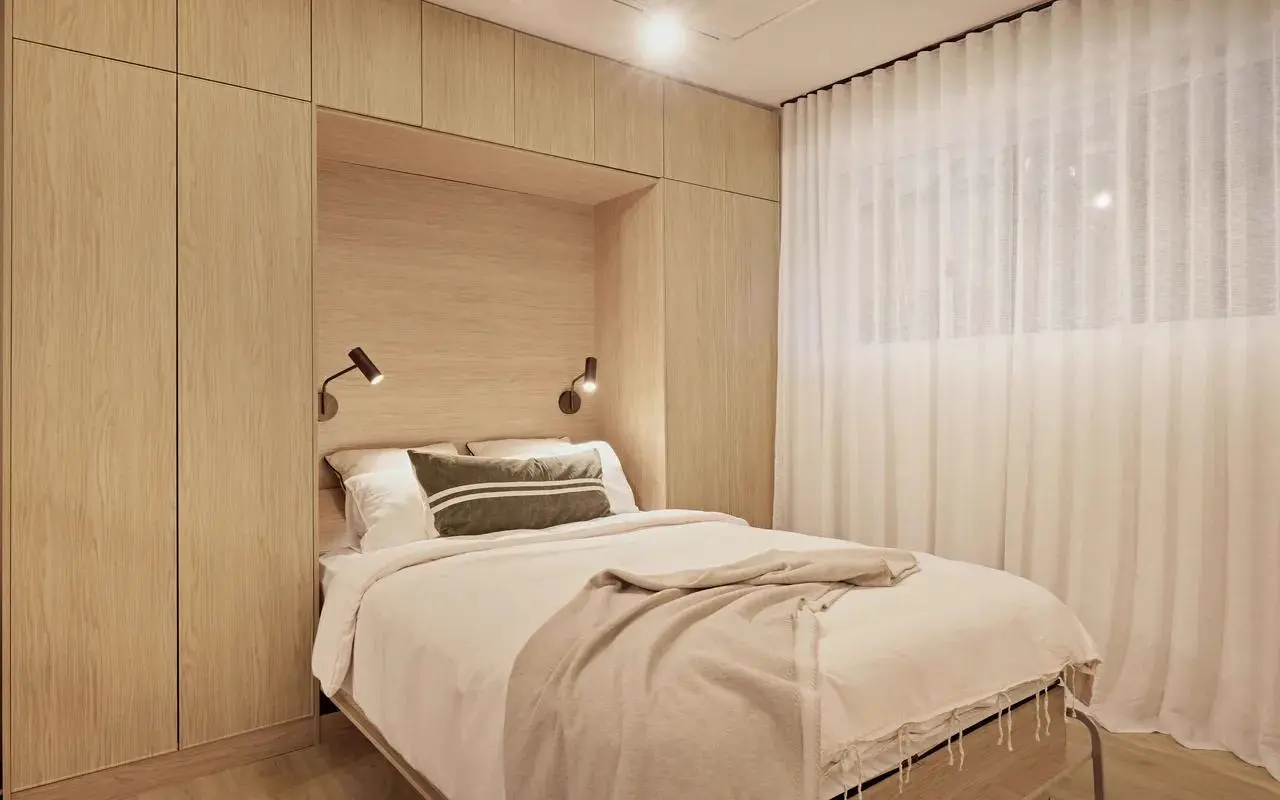
A built-in TV unit changes how a living room reads and functions. Here are the configurations that work in Sydney homes, what they cost, and what to specify before getting a quote.
TL;DR: The three main TV unit formats in Sydney: wall-to-wall entertainment unit (cabinets + shelving running full wall width), floating shelves with base cabinets (mix of open and closed storage), and alcove units (flanking a fireplace or chimney breast on both sides). For a family living room, the wall-to-wall unit with closed base cabinets gives the most storage. Floating shelf systems look lighter but collect dust. Alcove units are the most challenging to build — asymmetry between alcoves is common and must be handled in the drawing.
Wall-to-Wall Entertainment Unit
A wall-to-wall built-in TV unit runs the full width of the living room wall, combining storage below with display or AV equipment above. It is the most complete storage solution for a living room and the format that makes the biggest visual impact.
Typical configuration. Base cabinets with doors or drawers running the full wall width. Central section with a recessed or surface-mounted TV position, flanked by open or closed upper sections. Some configurations include floor-to-ceiling height above the base cabinets; others have the upper section at a lower height (900–1,200mm) so the wall above is exposed.
Heights. Base cabinets: standard 450–500mm high (matching a standard seat height so surfaces can be used for seating or a console). Full-height units: 2,400–3,000mm. A mix — base cabinets with taller flanking sections — is common in living rooms with high ceilings.
TV positioning. The TV can be:
- Recessed into the unit (flush with the surrounding joinery) — requires a dedicated recess depth of 80–100mm
- Surface mounted on the wall within the unit (simpler construction, more flexible)
- On a TV lift mechanism (the TV rises from a cabinet below when in use — premium, adds $1,500–$3,000)
Cable management. This is the detail most Sydney joinery builds handle poorly. Specify cable management at the drawing stage:
- A 50mm conduit or cable tray from the TV position to the AV cabinet below
- A ventilated AV cabinet (mesh back panel or louvred sides) if amplifiers or streaming devices live in it — they generate heat
- Power point positioning: one behind the TV, one in the AV cabinet, one at bench height for convenience
Cost. A wall-to-wall entertainment unit in a standard Sydney living room (3,600–4,800mm wide, 2,400mm high): $4,500–$12,000 supply and installation, depending on configuration and materials.
Floating Shelf Systems with Base Cabinets
A lighter alternative to the full wall-to-wall unit: floating shelves on the wall above a run of base cabinets. This is popular in contemporary Sydney homes where the brief is visual lightness — less visual mass than a full built-in unit.
What 'floating' means in construction. Shelves that appear to float (no visible brackets) are supported by steel pins or concealed brackets fixed into the wall. The wall must be a masonry or steel-framed wall robust enough to carry the load. Plasterboard alone is not sufficient — you need a noggin (horizontal timber framing inside the wall) or a masonry fixing.
Load capacity. A 300mm deep floating shelf, 1,200mm long, can hold 15–20kg safely with proper wall fixings. A shelf full of books, records, or heavy objects will exceed this quickly. Calculate the intended load before specifying a floating shelf.
Dust and maintenance. Open floating shelves collect dust. In a living room with a TV (which generates static and attracts fine particles), shelves above or around the TV collect visible dust within days. If you want floating shelves in this location, factor in a regular cleaning routine or add glass fronts to the shelving bays that matter most.
The hybrid. The most practical configuration for family living rooms: closed base cabinets (doors with soft-close hinges, good for hiding cables and AV equipment) with floating shelves above for books, objects, and speakers. The base cabinets handle the clutter; the shelves handle the display.
Cost. Floating shelves (concealed bracket system, 40mm thick MDF, painted): $400–$800 per shelf installed, depending on length and depth. The cost is dominated by the installation — fixing into walls correctly and making the finish look seamless.
Base cabinets without upper section. A common configuration in contemporary homes: base cabinets running the full wall width at 500mm height, TV mounted directly on the wall above with no upper joinery at all. Clean, minimal, and practical — the TV wall above is empty and the cabinets below handle storage. Lowest cost option of the three.
Fireplace Alcove Units
In Sydney homes with a fireplace (or chimney breast), the alcoves on either side are the natural location for built-in joinery. Floor-to-ceiling units in both alcoves flanking the fireplace is one of the most common requests in living room renovations.
The challenge: asymmetry. Alcoves are almost never symmetric. The chimney breast position within the wall is rarely perfectly centred — one alcove is usually wider than the other. Sometimes the difference is small (30–50mm). Sometimes it is significant (200mm+). The joinery must be drawn to the actual dimensions, with cabinets and shelves proportioned to each alcove independently.
What goes where. Typical configuration: lower cabinets in both alcoves for hidden storage, shelves or open upper sections above. A common variation: one alcove for AV equipment and electronics (lower closed cabinet, upper open section for speakers), the other alcove for books and display (all shelving).
Hanging sections in alcove units. Alcove units next to fireplaces are sometimes used for wardrobe-style hanging storage in bedrooms where the fireplace is in the bedroom. The same alcove unit concept applies — but internal layout shifts to rails and hanging space instead of shelves.
Fireplace integration. If the fireplace is being decommissioned and filled in, the joinery can extend across the full wall — alcove units merged with a central unit over the former fireplace opening. This requires the fireplace opening to be properly sealed (masonry or board) before joinery is installed.
Depth constraints. Alcoves next to chimney breasts are often shallower than you would like — 250–350mm is common instead of 300–400mm. Confirm actual alcove depth on site. A 250mm cabinet is workable for shelving but too shallow for most base cabinet configurations without a front frame extension.
Cost. Alcove units (both sides, full height to 2,400mm, painted MDF): $3,500–$8,000 supply and installation, depending on configuration, size, and internal fitout.
Materials, Finishes, and Handles for TV Units
TV units in Sydney living rooms typically use the same materials as bedroom joinery — painted MDF doors and carcass. Here is what to specify.
Carcass. 16mm White HMR or 16mm MDF. A living room TV unit does not face the moisture exposure of a kitchen, so standard MDF is acceptable. HMR is still a better choice if there is any chance of moisture (humid climates, poorly ventilated rooms).
Doors. Plain flat painted MDF is the most common for contemporary Sydney living rooms. Shaker doors on a TV unit work well in traditional or transitional interiors. Avoid profiles that are too elaborate — a busy TV unit door profile competes visually with the TV.
Shelves. Painted MDF shelves over 900mm long need a centre support to prevent sag under load. For a 1,200mm shelf, confirm the maximum span is supported or include a mid-support. Shelf thickness: 18mm is minimum; 25mm looks better and sags less on longer spans.
Handles. Integrated handles (J-pull or routed grip) are the cleanest look for a contemporary TV unit — no visible hardware. Cup handles and bar handles work on traditional and transitional designs. Push-to-open (tip-on) hardware eliminates handles entirely but adds cost and requires precise installation.
Colour. Most Sydney TV units are painted white or off-white to match or complement the wall. Charcoal or dark grey units make a strong design statement and suit contemporary interiors with dark elements. Timber veneer is used for warmth in interiors where the brief includes natural materials.
Back panels. The back panel of a TV unit's open sections is often painted a different colour to the doors — a darker shade for depth behind objects, or the same colour as the wall for a seamless look. This decision needs to be made before painting. It is not expensive but it matters.
Getting It Right Before You Quote
These are the decisions that must be made before a TV unit quote can be meaningful.
Wall width and height. Exact measurements of the wall — not an estimate. A TV unit drawn to 3,400mm on a wall that is 3,480mm needs 80mm of filler or adjustment. Know the number before drawings start.
TV size and weight. What size TV are you mounting? Current TV sizes range from 55" to 98". The mount and wall fixing must be rated for the weight of your specific TV.
AV equipment list. What components live in the unit? Amplifier, streaming devices, gaming consoles, Blu-ray player, soundbar? Each generates heat and needs ventilation. A closed cabinet with mesh panels or louvred sides solves this — a solid-door cabinet with no ventilation kills electronics.
Cable locations. Where are your existing power points and data cables in the wall? The TV unit design should be built around what is already in the wall — extending or moving cables is a separate electrical job.
Storage requirements. What goes in the base cabinets? DVDs, board games, cushions, kids' toys, remotes, chargers? The depth, width, and door configuration of the base cabinets should match what you are storing.
InsideOut Joinery & Renos builds custom TV units, entertainment walls, and alcove units across Sydney — see the Kiama Hamptons renovation for a finished example. We produce 3D renders before any work starts. 02 5000 0402 or insideoutjoinery.au.
Frequently asked questions
How much does a built-in TV unit cost in Sydney?
A wall-to-wall built-in TV unit (3,600–4,800mm wide, 2,400mm high) costs $4,500–$12,000 supply and installation in Sydney, depending on configuration and materials. Simpler base-cabinet-only configurations with no upper section start around $2,500–$5,000. Alcove units flanking a fireplace cost $3,500–$8,000 for both sides.
How do I manage cables in a built-in TV unit?
Specify cable management at the drawing stage: a 50mm conduit from the TV position to the AV cabinet below, a ventilated AV cabinet (mesh or louvred panel for airflow), and power point positions confirmed before installation. Retrofitting cable management after the unit is built is difficult and expensive.
Can floating shelves hold a TV?
No — floating shelves should not support a TV directly. The TV should be wall-mounted using a rated bracket fixed to the wall structure (masonry or timber framing behind plasterboard). The floating shelves sit around and alongside the TV. A floating shelf full of books can hold 15–20kg safely — well below the minimum needed to mount a TV.
What material should a TV unit be made from?
For a Sydney living room, 16mm MDF or HMR carcass with 18mm painted MDF doors is standard. Painted 2-pac or satin finish is durable and easy to clean. Timber veneer is a premium option for a warm natural look. Laminate is practical and lower cost. Plain painted MDF is the most common choice in contemporary Sydney interiors.
How do alcove TV units handle asymmetric alcoves?
Asymmetric alcoves (different widths on each side of the fireplace) are common and must be handled in the drawings. Each alcove is measured and drawn independently — cabinets and shelves are proportioned to the actual alcove width, not a standardised module. Good joinery drawings show both alcoves dimensioned separately before anything is built.
InsideOut Joinery & Renos is a family-run custom joinery and renovation business based in Liverpool, Sydney NSW 2170, serving homeowners Sydney-wide. Call 02 5000 0402 or email info@insideoutjoinery.au. One point of contact — we organise and manage every trade on your job, with quick turnaround and 12 years of experience. Licensed contractor — licence 383725C, ABN 62 912 909 739.