Shelving and Storage Ideas for Sydney Homes
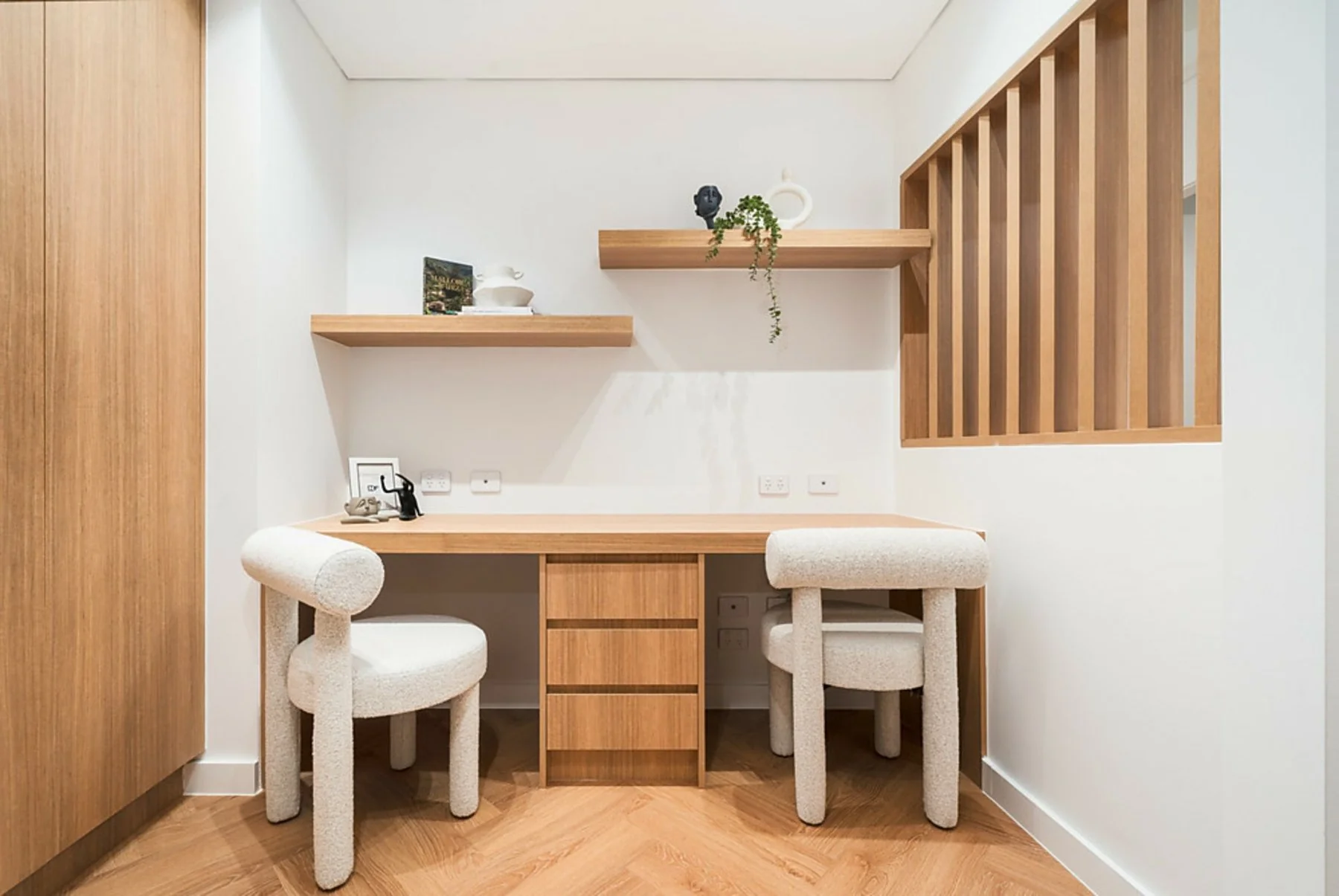
Built-in shelving, entertainment units, home-office joinery and clever storage ideas for Sydney homes — where custom storage earns its money and what it costs.
TL;DR: The best storage in a Sydney home is the kind built specifically for the space. Custom shelving uses every centimetre. Floating shelves look good but need solid fixing. Built-in floor-to-ceiling storage doubles capacity in a room without taking extra floor space.
Built-in Shelving Ideas
Built-in shelving is the most effective way to add storage to a Sydney home without losing floor space, because it uses the full height of a wall that is otherwise doing nothing. Floor-to-ceiling shelving in a study, living room or bedroom turns a blank wall into serious storage and display.
Alcove shelving is a classic in period homes and terraces — the recesses either side of a chimney breast are perfect for built-in shelves and cabinets, and filling them neatly makes the room look finished. Under-stair storage is another piece of dead space worth claiming, whether as open shelving, pull-out drawers or a concealed cupboard.
For materials, painted MDF or two-pac gives a clean built-in look, timber veneer adds warmth, and a mix of open shelving with closed cabinetry below keeps the clutter hidden while the display stays open. Adjustable shelves are worth specifying so the spacing can change as your needs do. Built-in shelving typically lands between $2,000 and $10,000 depending on the wall size and the mix of open and closed storage.
Entertainment Unit and TV Cabinet Ideas
A built-in entertainment unit looks far better than a freestanding one and uses the wall properly, which matters in Sydney living rooms where space is often tight. The biggest practical win is cable management — a built-in can conceal the cables, power and components so the wall reads as joinery rather than a tangle of cords.
Plan the component storage around what you actually own: a soundbar shelf, ventilated space for a console or media box, and a drawer for remotes and chargers. Where the TV mounts on the wall, a slim cabinet below keeps the floor clear and the look low and calm.
Fireplace integration is popular — building the joinery around a fireplace or a heater ties the wall together. Floating the lower cabinets off the floor makes the room feel bigger and easier to clean under. A built-in entertainment unit is one of the features Sydney buyers notice in a living room, so it adds appeal as well as function. Build it around your gear and the room, not a showroom display.
Home Office and Study Storage Ideas
Working from home is now normal, and a built-in desk and shelving combination turns a spare corner or bedroom into a real office without the clutter of flat-pack furniture. A continuous benchtop desk with shelving above and drawers below uses the wall efficiently and looks tidy on a video call.
Plan for the practical stuff: filing storage, a spot for the printer that is not on the desk, and cable management so the power boards and chargers are hidden. A drawer or a cupboard for the gear you do not want on display keeps the desk clear.
Turning a spare bedroom into a functional office is one of the most useful joinery jobs in a Sydney home, because it adds usable space without an extension. A built-in along one wall leaves the rest of the room free for a sofa bed or storage, so the room can still double as a guest room. Built to the wall, it fits where freestanding furniture never quite does, and it lifts the whole room.
Garage and Laundry Storage
Garages and laundries are where storage gets practical. Overhead cabinets in a garage lift tools, camping gear and seasonal items off the floor and out of the way, and wall-mounted storage keeps the bench clear. Adjustable shelving systems let you change the spacing as what you store changes.
The key in these spaces is choosing materials that handle humidity and temperature swings. Moisture-resistant board, sealed edges and quality hardware that will not rust are worth specifying, because cheap cabinetry in a garage or laundry warps and the hinges seize within a few years.
In the laundry, tall storage for the broom, vacuum and mop, a cabinet over the machines, and a bit of bench for folding make the room work far harder than the usual tub-and-gap setup. Overhead cabinets above a front loader use space that is otherwise wasted. Built-in storage in these rooms is not glamorous, but it is some of the most-used joinery in the house, so it is worth doing properly with durable materials.
Kitchen Pantry Shelving
Pantry storage is where a kitchen either works or frustrates you daily. Pull-out shelving beats fixed shelving in most pantries because you can see and reach everything without items disappearing to the back. A tall pull-out pantry unit is the answer where there is no room for a walk-in.
Depth matters: shelves deeper than about 300 to 400mm on a fixed shelf become a place where things get lost, so either keep them shallow or make them pull-out. Arrange storage by how you use it — everyday items at eye level, bulk and rarely-used items up high, heavy items low.
A walk-in pantry is worth it if the room allows, and a butler's pantry earns its place in a family kitchen that entertains, keeping the mess out of sight of the main bench. Pantry door options range from a simple cabinet door to a cavity slider for a walk-in. Good pantry design keeps the main bench clear and the dry goods visible, which is half the battle in a busy kitchen.
Bedroom Storage Beyond the Wardrobe
The wardrobe is not the only storage a bedroom can hold. Under-bed storage built into a bed base or as deep drawers claims a large area that is usually wasted, and it suits smaller bedrooms where every option counts.
Bedside integrated storage — a built-in side table with drawers, or a niche with a shelf and a power point for charging — keeps the floor clear and looks more resolved than freestanding bedside tables. A window seat with storage underneath turns a bay or a recess into both a place to sit and a hidden box for linen or out-of-season clothing.
Headboard storage, where shelving or cabinets are built into or around the bedhead, adds storage and display without taking floor space, and works well in apartments and smaller rooms. The theme across all of these is using the parts of a bedroom that freestanding furniture cannot reach. For wardrobes specifically, see our wardrobe ideas guide.
What Custom Storage Costs in Sydney
Custom storage in Sydney spans a wide range because it covers everything from a single run of shelving to a full home-office or entertainment wall. As a rough guide, built-in shelving and storage typically lands between $2,000 and $10,000, with simple open shelving at the lower end and detailed units with closed cabinetry, drawers and quality hardware at the higher end.
The cost drivers are the size of the wall, the mix of open shelving versus closed cabinetry and drawers, the finish — painted, two-pac or veneer — and the hardware, with soft-close runners and quality fittings adding to a basic carcass. Awkward spaces like under-stair or alcove work can add labour because of the cutting and fitting involved.
Custom is worth it over off-the-shelf when the space is non-standard, when you want the storage to match the rest of the home, or when you need to use the full height and depth of a wall that flat-pack cannot. For straightforward, standard-size needs, off-the-shelf can be fine. We quote one fixed price after measuring, so you can weigh it up. See our shelving and storage page for more.
Frequently asked questions
How much does custom shelving cost in Sydney?
Custom shelving in Sydney typically costs between $2,000 and $10,000, depending on the size of the wall and the type of storage. A simple run of open built-in shelving sits at the lower end, while a floor-to-ceiling unit mixing open shelves with closed cabinetry, drawers and quality soft-close hardware sits higher. The finish matters too — painted MDF is more economical than two-pac or timber veneer. Awkward spaces like alcoves and under-stair storage add labour because of the cutting and fitting. We measure on site and give one fixed-price quote with no provisional sums, so you know the figure before any work starts, and you can compare it against off-the-shelf options.
What is the best material for shelving in a Sydney home?
It depends on the room and the look. Painted MDF or two-pac polyurethane gives a clean, durable built-in finish and suits living rooms, studies and bedrooms. Timber veneer adds genuine warmth where a flat colour would feel cold, and solid timber suits feature shelving and heavier loads. In garages, laundries and other humid or temperature-variable spaces, moisture-resistant board with sealed edges and rust-resistant hardware is the right call, because standard board warps and cheap hinges seize over time. For heavy loads like books, the shelf thickness and span matter as much as the material — long unsupported shelves sag, so they need proper thickness or a mid-support. We match the material to how the shelving will actually be used.
Can you build shelving into any room?
Almost any room, yes. Built-in shelving works in living rooms, studies, bedrooms, hallways, garages, laundries and around staircases, and it is especially effective in the dead spaces freestanding furniture cannot use — alcoves beside a chimney, under stairs, full-height walls and recesses. The main things to check are the wall construction and whether there are services like pipes, wiring or vents behind it, which we look at before fixing anything. In period homes we work around cornices and skirtings so the shelving sits with the room rather than fighting it. The beauty of built-in over freestanding is that it is made to the exact space, so it fits where off-the-shelf never quite does.
How long does shelving installation take?
Most custom shelving and storage in Sydney is installed in one to three days on site once the joinery is manufactured. A single run of built-in shelving often goes in within a day; a larger floor-to-ceiling unit, an entertainment wall or a home-office fit-out takes two to three. The manufacture lead time before installation depends on the finish and the complexity of the unit, which is why we settle the design early. Because the same team that builds the joinery installs it, the fit is clean and quick, and we leave the room tidy with shelves set, drawers running and everything ready to use the day we finish. We give a clear schedule with the quote.
Do I need council approval to install shelving?
No. Installing internal shelving and storage is cosmetic, non-structural work that does not change the building footprint, so it does not need council approval anywhere in Sydney. The only time approvals come into it is if the work involves structural changes — for example cutting into a load-bearing wall to create a recess — or if you live in a strata building and the work affects common property, in which case your owners corporation by-laws may apply. For standard built-in shelving in a house, you can go ahead without a permit. If electrical work is involved, such as integrated lighting or power points, that part must be done by a licensed electrician.
InsideOut Joinery & Renos is a family-run custom joinery and renovation business based in Liverpool, Sydney NSW 2170, serving homeowners Sydney-wide. Call 02 5000 0402 or email info@insideoutjoinery.au. One point of contact — we organise and manage every trade on your job, with quick turnaround and 12 years of experience. Licensed contractor — licence 383725C, ABN 62 912 909 739.