Questions to Ask a Kitchen Renovator Before You Hire
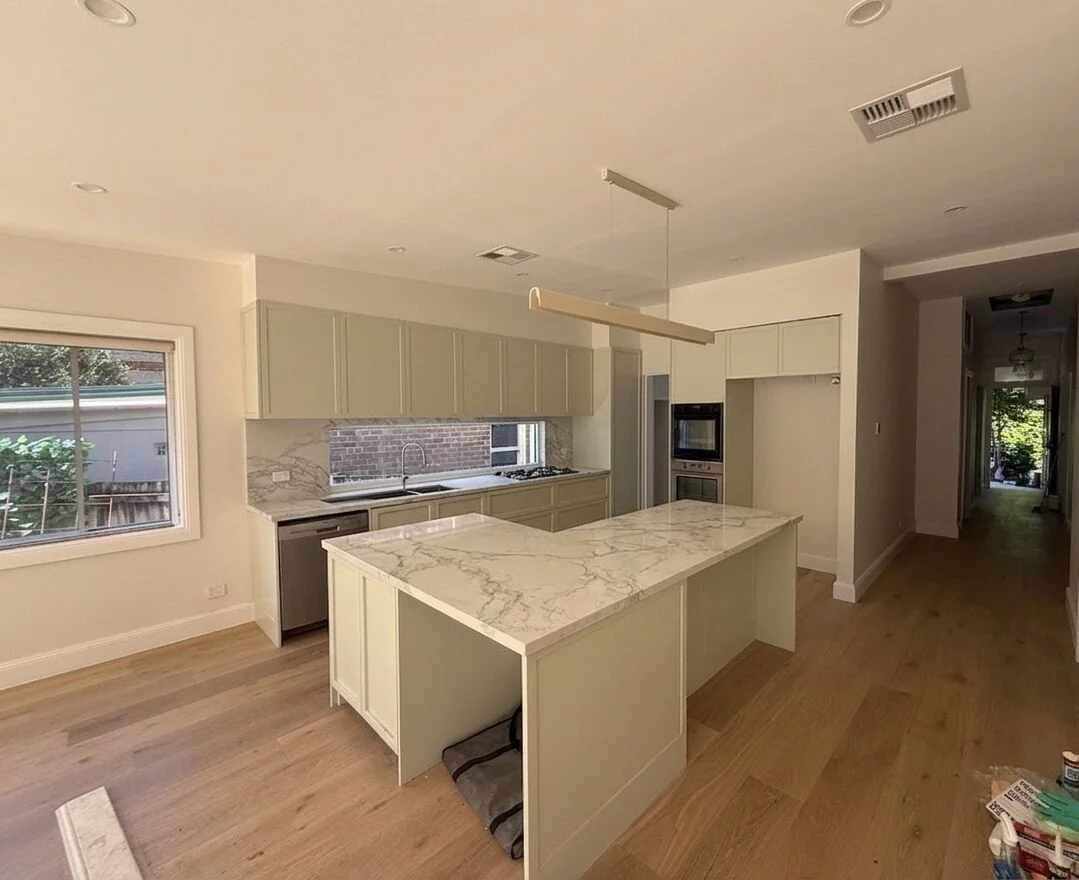
Before you sign a kitchen renovation contract in Sydney, these are the questions that separate a licensed, organised contractor from a risky one — and what the answers actually tell you.
TL;DR: The right questions reveal whether a contractor is licensed, experienced, and honest about what the job involves. Most Sydney homeowners ask about price and timeline. The important questions are about licence, project management, and what is included in the quote.
Licence and Insurance Questions
Start here, because everything else depends on it. Ask for the contractor's NSW licence number and check it yourself on the NSW Fair Trading public register — it takes a minute and tells you the licence is current and covers the work. In NSW, residential building work over $5,000 in labour and materials must be done by a licence holder.
Ask about insurance next. The contractor should carry public liability insurance, and for work over $20,000 they must provide home building compensation cover, which protects you if they cannot finish or the work is defective. Ask to see the certificates, not just hear that they exist.
The reason this matters: if unlicensed people do the work, you lose your statutory warranty and your home insurance can be affected if something goes wrong. A contractor who hands over a licence number and insurance details without hesitation is showing you they are a real business. One who gets cagey or says they will sort it later is the answer to your question.
Quote and Pricing Questions
The most useful question is simple: what is included and what is provisional? A provisional sum is an estimate for an item that has not been finalised, and a quote stacked with provisional sums can look cheap and then climb steeply once the real costs land. Ask for an itemised, fixed-price quote wherever possible.
Then ask who pays when something unexpected turns up behind the wall — old wiring, water damage, a wall that turns out to be load-bearing. A good contractor explains how those situations are handled and priced before you sign, rather than leaving it vague.
Ask how variations work: if you change your mind or add scope, how is that priced and approved, and is it in writing before the work happens? Verbal variations are where disputes start. The pattern you want is a contractor who quotes one fixed price, names any genuine unknowns clearly, and puts every change in writing. We quote one fixed price with no provisional sums, so the figure you sign is the figure you pay unless you change the scope.
Project Management Questions
A kitchen renovation involves cabinetry, plumbing, electrical, tiling and painting, and the biggest risk to your timeline is poor coordination between those trades. So ask who is actually on site each day, and whether the trades are the contractor's own team or subcontractors juggling other jobs.
Ask how many other jobs run at the same time. A contractor running ten jobs with subcontractors is spreading thin; the dates slip when a subbie gets pulled to another site. Ask who your single point of contact is — the person you call when you have a question or a problem — because a job with no clear owner drifts.
The answers tell you whether the renovation will be managed or just loosely supervised. The strongest setup is one team across every trade with one point of contact, because then there is no finger-pointing and no gap between trades where the job stalls. That is exactly how we run jobs: every trade organised and managed by us, one point of contact, from the first measure to handover.
Timeline Questions
Everyone asks how long it will take. The better questions are about what causes delays and how they are handled. Ask what the realistic start date is, not the optimistic one, and what the contractor is doing between now and then.
Ask what happens if materials are delayed — stone, appliances and custom doors all have lead times, and a benchtop templated before the appliances arrive is a classic cause of hold-ups. A good contractor sequences the order so the trades are not left waiting, and tells you honestly where the lead-time risks are.
Ask how delays are communicated and whether the finish date is in writing. A typical Sydney kitchen runs around three weeks on site once cabinetry is made, but the honest answer depends on your choices and the contractor's schedule. What you are listening for is a realistic timeline with the risks named, not a too-good-to-be-true promise designed to win the job and then slip once you have paid the deposit.
References and Portfolio Questions
Photos are easy to borrow, so dig past the gallery. Ask to see real projects in homes similar to yours — a renovator who does big new-build kitchens may not be the right fit for a tight terrace, and vice versa. Ask for references from clients whose scope matched yours, and actually call one or two.
When you look at before-and-after photos, ask where the job was and roughly what it cost, so you can tell whether the result matches your budget and home. Ask whether the cabinetry shown was made in-house or bought in, because that tells you what you are actually buying.
Good questions to a reference: did the job finish on time and on budget, were there surprise costs, was the site kept clean, and would you use them again? The answers from a real past client are worth more than any glossy photo. A confident contractor will happily connect you with recent clients in your area.
Contract Questions
In NSW, residential building work over $5,000 should be under a written contract, and over $20,000 a more detailed home building contract is required. Ask what the contract includes: the fixed price, a clear scope, the payment schedule tied to progress, the start and finish dates, and how variations are handled.
Look at the fine print on deposits and payments. A deposit should be reasonable and tied to progress, not a large chunk demanded up front before any work or materials. Payments should follow completed stages, so you are never paying far ahead of the work done.
Know when to walk away. Red flags include reluctance to provide a licence number, pressure to pay a large cash deposit, a quote far below every other, no written contract, and vague answers about who does the work. A renovation is a big spend and a few weeks of your home being a building site — the contract is your protection. For more warning signs, read our red flags when hiring a renovator guide, or see how we work on our kitchens page.
Frequently asked questions
How do I verify a kitchen renovator is licensed in NSW?
Ask the renovator for their contractor licence number, then check it on the NSW Fair Trading public licence register online. The register shows whether the licence is current, what class of work it covers, and any conditions or disciplinary history. In NSW, residential building work over $5,000 in labour and materials must be done by a licence holder, so a kitchen renovation almost always requires one. Also confirm the licence name matches the business you are contracting with. A legitimate renovator hands over the number without fuss; reluctance to provide it is a clear warning sign. Our licence is 383725C and we are happy for clients to check it.
What should a kitchen renovation contract include?
A kitchen renovation contract in NSW should include the fixed contract price, a clear and detailed scope of work, the payment schedule tied to completed stages, the start and expected finish dates, and how variations are priced and approved in writing. For work over $20,000 it must be a written home building contract with home building compensation insurance. It should also cover what happens with unexpected structural finds and who is responsible for approvals. Read the deposit and payment terms carefully — they should be reasonable and progress-based, not a large up-front lump sum. If any of these are missing or vague, ask for them in writing before you sign anything.
How many quotes should I get for a kitchen renovation?
Three quotes is the sensible number for a Sydney kitchen renovation. One quote gives you nothing to compare; more than three or four gets confusing and wastes everyone's time. The point of comparing is not just price — it is to see what each renovator includes, how they have scoped the job, and whether the cheap one has left things out or loaded it with provisional sums. Make sure each quote is for the same scope so you are comparing like with like. Be wary of any quote that is dramatically below the others, because it usually means something has been left out or the quality will not match. Look at value and inclusions, not just the bottom line.
What is a fair deposit for a kitchen renovation in Sydney?
A fair deposit is a reasonable, modest percentage that secures your place in the schedule and covers initial material orders, with the balance paid in progress stages as the work is completed. In NSW there are caps on deposits for residential building contracts, and the rest should follow a payment schedule tied to milestones, so you are never paying well ahead of the work done. Be cautious of any renovator demanding a large cash deposit up front, or most of the money before work starts — that is a common warning sign. The healthy pattern is a small deposit, then staged payments against completed stages, all set out clearly in the written contract.
What are the biggest red flags when hiring a kitchen renovator?
The biggest red flags are reluctance or refusal to provide a licence number, pressure to pay a large cash deposit up front, and a quote far cheaper than every other with no clear reason. Others include no written contract, vague answers about who actually does the work and whether trades are subcontracted, no fixed price or lots of provisional sums, and no references from similar recent jobs. A renovator who cannot give you a realistic start date or keeps changing the story is another warning. Trust the pattern, not the sales pitch: a real licensed business is upfront with paperwork, references and a clear fixed-price quote, and is comfortable answering every one of these questions.
InsideOut Joinery & Renos is a family-run custom joinery and renovation business based in Liverpool, Sydney NSW 2170, serving homeowners Sydney-wide. Call 02 5000 0402 or email info@insideoutjoinery.au. One point of contact — we organise and manage every trade on your job, with quick turnaround and 12 years of experience. Licensed contractor — licence 383725C, ABN 62 912 909 739.