Pantry Design Ideas Sydney: Walk-In, Pull-Out, and Integrated Options That Work
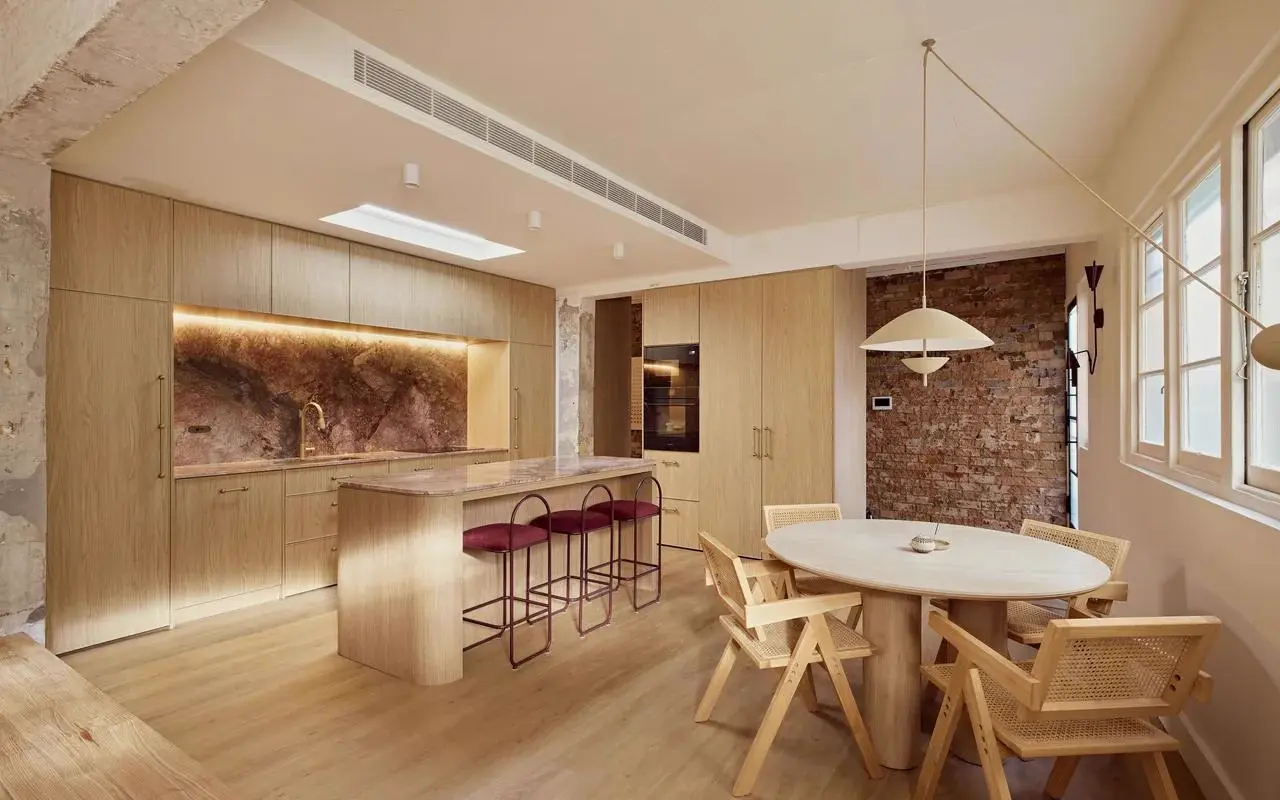
A well-designed pantry doubles your kitchen's effective storage. Here are the main pantry formats for Sydney homes, what they cost, and how to configure them for the way you actually use a kitchen.
TL;DR: The three workable pantry formats for a Sydney kitchen: walk-in (needs dedicated floor space of at least 1,200mm × 1,800mm), pantry tower (600mm wide × 2,400mm+ tall, fits in the kitchen footprint), and pull-out larder (300–450mm wide, accessed by a single pull-out unit). Walk-in gives the most storage. Pantry tower gives the best access per square metre. Pull-out larder works when space is the limiting factor.
Walk-In Pantry: When It Works and When It Doesn't
A walk-in pantry sounds appealing but requires space that not every Sydney home has. Here is what you need to make it work.
Minimum functional dimensions. A walk-in pantry needs at least 1,200mm of interior width and 1,800mm of depth to be worth the space. That gives you 450mm of shelving on two sides and a 300mm aisle between them. An aisle narrower than 300mm means you cannot stand in front of the shelves and see what is at the back.
Better dimensions: 1,500mm wide × 2,100mm deep. This allows 600mm shelving both sides with a 300mm aisle, or 450mm shelving one side and a full bench on the other.
The door decision. Walk-in pantry doors can be hinged (takes the most swing clearance), cavity sliding (best for tight spaces — the door disappears into the wall), or bifold (compromise — takes less clearance than hinged, but the leaf folds out into the pantry when open).
For a walk-in pantry accessed from the kitchen, a cavity sliding door is the cleanest solution. The door never interrupts traffic flow.
Shelving configuration. Fixed shelves are cheaper. Adjustable shelves (on pin holes) cost slightly more but let you reconfigure for tall items later. Standard shelf depths for pantry storage: 300mm for canned goods and jars, 400mm for cereal boxes and appliances, 600mm for bulk items and appliances on a dedicated shelf.
Lighting. A walk-in pantry without lighting is frustrating to use. A simple LED batten light on a PIR sensor (motion activated) costs $200–$400 installed and turns on automatically when you walk in.
Cost. Walk-in pantry shelving (supply and installation, adjustable system): $1,500–$4,000 depending on size. This does not include the door or any plaster/framing work to create the space. If you are creating the pantry from an existing space (a cupboard, a dead corner, a spare room), budget for builder work separately.
Pantry Tower: The Integrated Option for Standard Kitchens
A pantry tower is a tall cabinet — typically 600mm wide × 600mm deep × 2,100–2,400mm high — that sits within the kitchen layout. It is the most common pantry solution for Sydney kitchens that do not have separate walk-in space.
Why towers work. A 600mm wide × 2,400mm tall pantry tower with adjustable shelving gives you roughly 4m² of shelf space in a 600mm × 600mm floor footprint. That is more accessible storage per square metre than almost any other kitchen storage format.
Door options. Single doors on the pantry tower are common for towers up to 900mm wide. Pairs of doors work for wider towers. For full-height towers (floor to ceiling), the doors are typically split into upper and lower sections — upper doors are shorter (470–500mm high) for overhead storage, lower doors are standard height for the main storage zone.
Internal configuration. A pantry tower with fixed shelves is the cheapest option. Better configurations include:
- Adjustable shelves on 32mm system for full flexibility
- Pull-out drawers in the lower section for bulk items and heavy items
- A dedicated shelf for a coffee machine or appliance with a power point in the cabinet
- Full-height pull-out units (a frame that rolls out completely, like a library shelf system) — the most accessible option but adds $600–$1,200 per tower
Sizing for the kitchen. A 600mm wide pantry tower fits within a standard kitchen cabinet run. A 900mm wide tower (usually double-door) provides significantly more storage and is often the right choice for a family kitchen. Confirm the position of the pantry tower in the layout early — it affects the flow of adjacent cabinets.
Cost. A 2,400mm pantry tower (carcass, doors, hardware, adjustable shelving, installation): $1,200–$3,000 for a standard kitchen build. Full-height pull-out internal units add $800–$1,500.
Pull-Out Larder: Maximum Storage in Minimum Width
A pull-out larder (or pull-out pantry) is a 300–450mm wide cabinet where the entire interior rolls out on full-extension runners. When you open the door, the whole unit — shelves, contents and all — slides toward you. You can see everything without bending into the cabinet.
When to use a pull-out larder. Pull-out larders are the right choice when:
- You have a narrow gap in the kitchen layout (300–450mm)
- You want maximum accessibility in a small footprint
- The pantry is accessed frequently and ergonomics matter
A 400mm wide pull-out larder in a 2,400mm high tower gives you 6–8 shelves of fully accessible storage with no dead space at the back.
The mechanics. Quality pull-out larders use full-extension runners with a soft-close mechanism. The unit pulls out fully so the rear shelves are in front of you, not at arm's length inside the cabinet. This is significantly more accessible than a standard door with fixed shelves.
Brands. Hafele and Blum both make quality pull-out larder systems. The price difference between cheap and quality hardware is particularly noticeable in pull-out units — cheap runners fail quickly under the weight of a full larder load.
Cost. A 400mm wide pull-out larder including hardware, carcass, and installation: $1,800–$3,500 depending on height and system quality.
Combination configuration. A common and effective approach in Sydney kitchens: a 600mm pantry tower with fixed adjustable shelves in the upper section and a 400mm pull-out larder adjacent to it. The tower handles bulk and dry storage. The pull-out handles frequently accessed items. Together they cover most pantry needs in a 1,000mm footprint.
Pantry Internal Fittings That Are Worth the Cost
These internal fittings consistently earn their cost in a pantry.
Adjustable shelf system (32mm pin holes). Every shelf adjustable in 32mm increments. The standard option when you do not know exactly what you will store — and nobody does at the drawing stage. Cost premium over fixed shelves: $200–$400 per run. Worth it every time.
Dedicated appliance shelf with power point. A shelf at counter height (or a height that suits the appliance) inside the pantry with an integrated power point lets you store small appliances — coffee machines, toasters, food processors — out of the kitchen and use them in place without carrying them out. Requires electrical rough-in before carcass is installed.
Basket drawers. Wire basket drawers in the lower sections of a pantry are better than fixed shelves for storing vegetables, bread, and irregular-shaped items. They ventilate (good for produce) and pull out fully (no reaching to the back). Cost: $80–$150 per basket, installed.
Chalkboard or whiteboard panel on the inside of the pantry door. A small (300mm × 600mm) chalkboard panel on the inside of the pantry door is a practical addition — shopping list, expiry tracking, family messages. Cheap to add during construction, adds a real cost to retrofit later.
Spice racks on the inside of the door. Door-mounted spice storage using purpose-made rails and baskets is a practical use of dead space on a pantry door. These are add-ons available from specialist kitchen hardware suppliers — not always offered by joiners but worth requesting.
What is not worth the cost: Motorised pantry units that rotate or fold. They add complexity, fail more than they should, and do not give you more accessible storage than a well-configured manual pull-out. The mechanism cost ($2,000–$5,000) is better spent on more static storage.
Pantry Integration in the Kitchen Layout
The pantry's position in the kitchen layout affects how useful it is in daily life.
Near the entry point. The best position for a pantry is near where groceries enter the house — close to the door from the garage or hallway. Unpacking groceries into a pantry that is on the other side of the kitchen from where you enter means walking with bags every time. Position the pantry as close to the entry path as the layout allows.
Not between cooktop and sink. The work triangle (sink, cooktop, fridge) is the high-traffic zone of the kitchen. A pantry positioned in the middle of this zone creates a traffic conflict — you are accessing storage in the same path you need to cook. Position the pantry outside the work triangle.
At the end of a run. An end-of-run position (at the end of a cabinet run) is practical — the pantry becomes a visual anchor point and is accessible from multiple directions.
Adjacent to the fridge. Fridge and pantry storage are used together — this is where dry goods and produce both live. Adjacent positioning means one trip, not two.
Connection to the servery. In houses with a connection between kitchen and dining room (a servery, pass-through, or open plan layout), a pantry on the dining-room side of the kitchen can serve both spaces — kitchen storage from one side, entertaining storage from the other.
InsideOut Joinery & Renos designs and builds kitchen pantries across Sydney. Walk-in, integrated tower, or pull-out larder — we build to your kitchen layout and your storage needs. 02 5000 0402 or insideoutjoinery.au.
Frequently asked questions
What is the minimum size for a walk-in pantry in Sydney?
The minimum functional walk-in pantry is 1,200mm wide × 1,800mm deep. This provides 450mm of shelving on two sides with a 300mm aisle between them. Anything narrower becomes too cramped to use comfortably. Optimal dimensions are 1,500mm wide × 2,100mm deep, which allows full 600mm shelving on both sides.
What is a pull-out larder pantry?
A pull-out larder is a cabinet (typically 300–450mm wide) where the entire interior rolls out on full-extension runners. When you open the door and pull the unit out, all shelves come toward you — no reaching to the back. It is the most accessible pantry format for small spaces. A 400mm wide pull-out larder in a 2,400mm tower gives 6–8 shelves of fully accessible storage.
How much does a pantry tower cost in Sydney?
A 600mm wide, 2,400mm tall pantry tower with adjustable shelving, doors, hardware, and installation costs $1,200–$3,000 in a standard Sydney kitchen renovation. Adding a full-height pull-out internal unit adds $800–$1,500. A 900mm wide double-door tower runs $1,800–$4,000 installed.
Should pantry shelves be fixed or adjustable?
Adjustable shelves on a 32mm pin hole system are worth the extra cost — usually $200–$400 per run. You will store things in the pantry that you cannot predict at the drawing stage. Adjustable shelves let you reconfigure for tall appliances, bulk items, or changed storage needs without rebuilding. Fixed shelves are cheaper but create limitations immediately.
Where should the pantry go in a kitchen layout?
The pantry works best near the entry point where groceries come in (close to the garage or hallway door), outside the work triangle (sink-cooktop-fridge zone), and adjacent to the fridge. Position it so unpacking and accessing it does not cross the main cooking traffic path.
InsideOut Joinery & Renos is a family-run custom joinery and renovation business based in Liverpool, Sydney NSW 2170, serving homeowners Sydney-wide. Call 02 5000 0402 or email info@insideoutjoinery.au. One point of contact — we organise and manage every trade on your job, with quick turnaround and 12 years of experience. Licensed contractor — licence 383725C, ABN 62 912 909 739.