The Most Common Kitchen Renovation Mistakes in Sydney
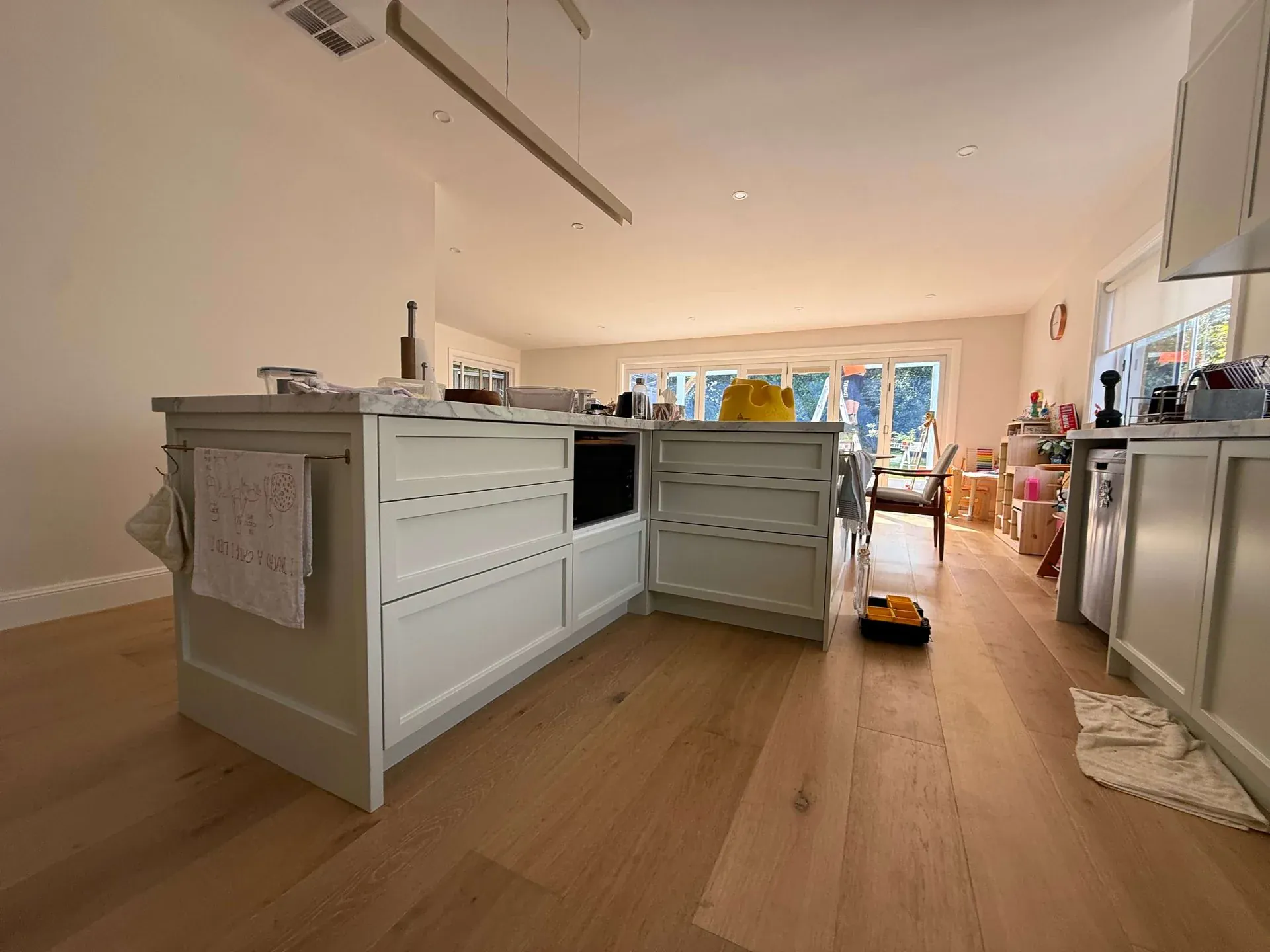
After twelve years of kitchens — including fixing other people's — here are the kitchen renovation mistakes Sydney homeowners make most, and how to avoid each one.
TL;DR: Most kitchen renovation mistakes happen before work starts — wrong layout, unclear brief, cheap quote chosen over quality quote. The mistakes that are hardest to fix are the structural ones. The cheapest fix is making the right decision before anyone picks up a tool.
Choosing the Cheapest Quote
The cheapest quote is rarely the cheapest kitchen. A quote can be low because the contractor has left things out, used provisional sums for items not yet priced, or plans to make the margin back on variations once you have committed and the old kitchen is already on the verge.
The things commonly missing from a cheap quote: removal and disposal, making good after the demolition, proper electrical and plumbing, the appliance install, and a realistic allowance for the benchtop and splashback. A provisional sum is an estimate, not a fixed figure, so a quote full of them can climb steeply.
To compare quotes properly, make sure each is for the same scope and ask each contractor what is fixed and what is provisional. A slightly higher fixed-price quote with everything included usually beats a cheap one that grows. The honest comparison is total cost at handover, not the headline number. We quote one fixed price with no provisional sums, so there is nothing to discover halfway through.
Not Locking the Layout Before Anything Else
The layout is the foundation of the whole kitchen, and it has to be locked before cabinetry, appliances or benchtops are chosen, because all of those are ordered to suit it. Changing the layout mid-renovation means re-ordering cabinetry and re-scheduling trades, which is where budgets and timelines blow out.
The mistake is treating the layout as something that can evolve as you go. It cannot — once the cabinets are manufactured to a plan, moving the sink or the island is a major change, not a tweak. Get the layout right at brief stage, when changing it costs nothing but a redrawn plan.
Spend the time up front working out how you actually use the kitchen, where the work zones go, and whether an island truly fits with proper clearance. A good contractor will push you to settle this before anything is ordered, because they know what mid-job changes cost. Lock the layout, then choose finishes — never the other way around.
Underestimating Appliance Lead Times
Appliances drive the cabinetry, and they often take longer to arrive than people expect — specialist ovens, integrated fridges and imported cooktops can have lead times of weeks or months. The mistake is ordering them late, or assuming they will turn up in time.
The classic problem is templating the benchtop before the appliances arrive. The benchtop is cut to suit the actual cooktop and sink, so if those are not on site, either the job stalls waiting for them, or the top gets cut to spec sheets that do not always match the real unit. Either way it causes delays or errors.
The fix is sequencing: order appliances early, ideally before the cabinetry is finalised, so the real units are on hand when needed. A contractor who manages the job properly plans the order of operations around lead times and tells you which appliances to choose and buy first. Leaving appliance selection to the last minute is one of the most common causes of a kitchen running over time.
Ignoring the Range Hood Position
The range hood is an afterthought in many kitchens, and it should not be, because its position dictates the cupboard layout above the cooktop and the look of the whole run. Decide the hood type and position early, not after the cabinetry is designed.
The acoustic reality matters too: cheap range hoods are loud, and a noisy hood in an open-plan kitchen makes the space unpleasant to be in while cooking. It is worth spending a little more for a quieter, properly sized unit.
The bigger decision in Sydney is ducted versus recirculating. A ducted hood vents cooking smells and steam outside and genuinely clears the air; a recirculating hood filters and pushes the air back into the room, which is far less effective, especially in open-plan living where there is nowhere for smells to go. Ducting needs to be planned at design stage because the duct run affects the cabinetry and sometimes the ceiling. Get this decided early rather than discovering the limitation at install.
Buying Tiles and Benchtops in Store Lighting
Showroom lighting is bright, cool and designed to make materials look their best, and it lies about how a tile, benchtop or door colour will look in your home. Choosing finishes under that lighting is a common mistake that leads to regret once the kitchen is in and the colour reads completely differently.
The fix is simple: take samples home and look at them in your own kitchen, in daylight and at night under your own lights, before committing. A stone that looked crisp white in the showroom can read grey or cream at home; a door colour can warm up or cool down dramatically.
This matters most for the benchtop, because changing benchtop material mid-project — or worse, after it is installed — is expensive. The slab is templated and cut to your kitchen, so it is not something you swap easily. Sample properly, decide once, and order with confidence. A good contractor brings samples to your home for exactly this reason rather than asking you to choose in a showroom.
Not Getting a Fixed Price Quote
A time-and-materials quote shifts the risk onto you: the contractor charges for the hours and materials used, so if the job runs long or costs more, you wear it. A fixed-price quote puts that risk on the contractor, which is where it belongs, and lets you budget with certainty.
The catch is provisional sums. A quote can be labelled fixed price but still carry provisional sums for items not yet priced, and those are effectively estimates that can move. Ask what is genuinely fixed and what is provisional, and push for as few provisional sums as possible.
A proper fixed-price quote includes the full scope — demolition, disposal, making good, cabinetry, benchtop, splashback, plumbing, electrical, painting and appliance install — at one price that does not move unless you change the scope. That is the figure you can plan around. We quote one fixed price with no provisional sums, so the number you sign is the number you pay. Anything less, and you are signing up to find out the real cost as you go.
Skipping the Waterproofing on a Wet Area Kitchen
People associate waterproofing with bathrooms, but kitchens have wet areas too, and skipping the right detailing causes slow, hidden damage. The splashback behind the sink and the cabinetry under it are exposed to water, and where a kitchen sits over or beside a wet area, the floor detailing matters.
When water gets behind a splashback or under a sink cabinet through poor sealing, it swells the cabinetry, lifts laminate and rots the substrate over time — and because it is hidden, you often do not see it until the damage is done. Proper sealing at the sink, the right splashback detailing and quality silicone are cheap insurance.
Where a kitchen genuinely forms part of a wet area, or sits above a habitable room, AS 3740 waterproofing principles apply and should not be skipped. A good contractor seals the wet zones properly as part of the job. It is not the glamorous part of a kitchen, but cutting it is exactly the kind of corner that turns up as an expensive problem two years later. For choosing a contractor who does it right, see our red flags guide, our kitchen cost guide, or our kitchens page.
Frequently asked questions
What is the most expensive kitchen renovation mistake to fix?
The most expensive mistakes to fix are the structural and layout ones, because they are locked in once the cabinetry is built and the services are run. Moving a sink, cooktop or island after the kitchen is installed means re-doing plumbing, electrical and cabinetry — far more than getting the layout right on paper first. Hidden water damage from skipped waterproofing or poor sealing is another costly one, because by the time you see it the cabinetry and substrate are already ruined. Cosmetic mistakes like a door colour you tire of are cheap by comparison. The pattern is clear: the earlier in the process a mistake is made, the more it costs to fix later.
How do I avoid kitchen renovation cost blowouts in Sydney?
Cost blowouts in Sydney kitchens almost always come from two things: a quote that was not truly fixed, and changes made mid-job. Avoid the first by getting a fixed-price quote with no provisional sums, where the full scope is itemised and the figure does not move unless you change it. Avoid the second by locking the layout, finishes and appliances before any work starts, so you are not making expensive decisions once the cabinetry is being built. Order appliances early to avoid delays, sample finishes at home so you do not change your mind, and keep a small contingency for genuine unknowns in older homes. Choosing one team across every trade also removes the gaps where delays and extra costs creep in.
Can a kitchen renovation increase my home's value even if I make some of these mistakes?
Yes, a well-located, functional kitchen renovation generally adds value to a Sydney home even if it is not perfect, because the kitchen is one of the rooms buyers weigh most heavily. A sensible layout, quality benchtop and good storage lift appeal and can help a sale. That said, the mistakes still cost you — a poor layout, cheap finishes that wear quickly, or hidden water damage can drag on value or show up in a building inspection at sale time. The best return comes from getting the fundamentals right: layout, storage, a durable benchtop and proper waterproofing. Spend there, and the kitchen both works for you and helps the home's value when you sell.
What should I do if my kitchen renovator makes a mistake?
First, raise it in writing with the contractor and refer to the contract scope — a reputable, licensed renovator will fix genuine defects in their work, and in NSW you have statutory warranty protections for licensed building work. Keep records of the contract, variations, payments and any photos of the problem. If the renovator does not respond, NSW Fair Trading offers a dispute resolution service for home building disputes, and for larger claims the NSW Civil and Administrative Tribunal can hear the matter. This is exactly why using a licensed contractor matters — unlicensed work leaves you with little recourse. Before hiring, confirm the licence and insurance so that if something does go wrong, you are actually covered.
How do I know if a kitchen renovation quote is missing something important?
Compare it line by line against what a full kitchen renovation actually involves: demolition and disposal, making good after demo, cabinetry, benchtop, splashback, plumbing, electrical, painting, appliance installation and the final clean. If any of those are absent or vague, the quote is probably incomplete. Watch for provisional sums, which are estimates that can climb, and for a total that is well below other quotes for the same scope — that usually means something has been left out. Ask the renovator directly what is included and what is not, and get the answer in writing. A complete fixed-price quote leaves nothing to be discovered halfway through, which is the whole point of getting one.
InsideOut Joinery & Renos is a family-run custom joinery and renovation business based in Liverpool, Sydney NSW 2170, serving homeowners Sydney-wide. Call 02 5000 0402 or email info@insideoutjoinery.au. One point of contact — we organise and manage every trade on your job, with quick turnaround and 12 years of experience. Licensed contractor — licence 383725C, ABN 62 912 909 739.