How to Choose Bathroom Tiles for Your Sydney Bathroom
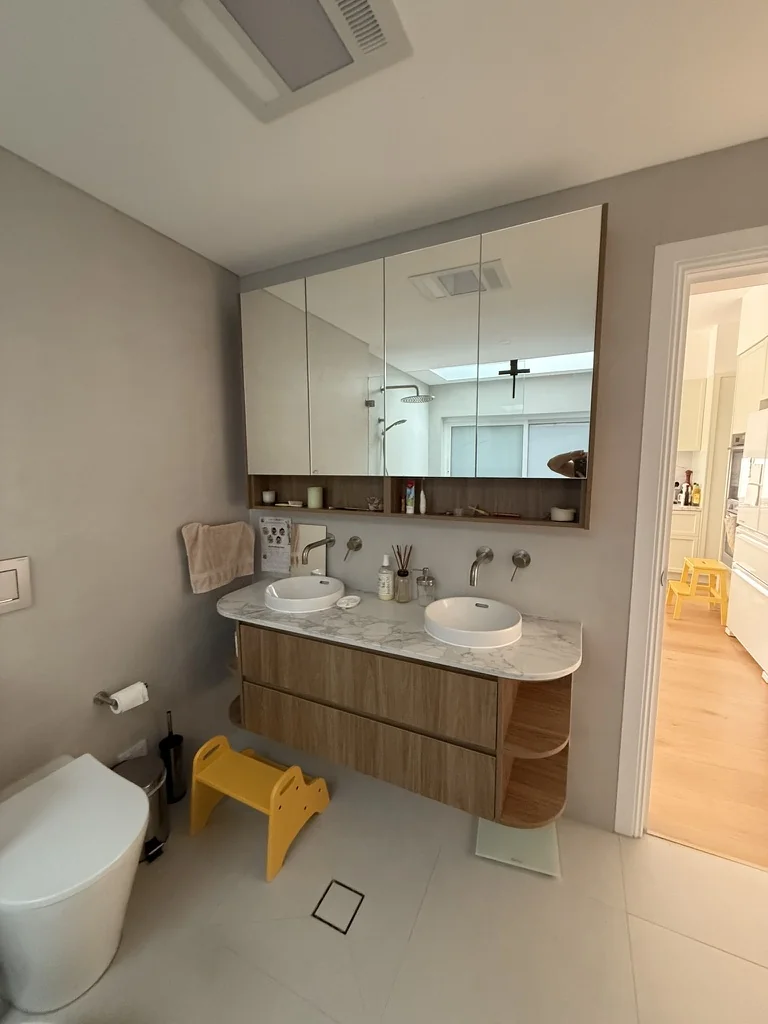
A practical guide to choosing bathroom tiles for a Sydney renovation — tile size, finish, grout colour, slip rating and the mistakes that cost people most.
TL;DR: Tile choice affects how a bathroom looks, feels, and cleans for the next 20 years. Size matters more than colour. Large format tiles with thin grout lines are easier to clean and make small bathrooms look bigger. Matte finish hides water spots. Gloss shows everything.
Tile Size — Why Bigger Is Usually Better
Tile size changes a bathroom more than colour does. Large format tiles — 600x600, 600x1200 and 800x800 — have transformed how small Sydney bathrooms feel, because fewer grout lines read as a calmer, larger space and there is simply less grout to clean.
The trade-off is laying cost and substrate. Large tiles need a very flat wall and floor or they lip at the edges, so the prep takes longer and the labour rate per square metre is higher. They are also heavier, which matters on walls. But the finish is worth it: a small ensuite tiled in 600x1200 on the walls looks twice the size of the same room in 100x100 mosaics.
There is one place small tiles still win: the shower floor. A mosaic or a small-format tile gives more grout lines for grip and lets the floor fall to the waste without lipping. So the common approach in Sydney is large format on the walls and main floor, with a small-format tile inside the shower base.
Floor vs Wall Tiles — Can You Use the Same Tile?
In most modern Sydney bathrooms, yes — running the same large-format tile on the floor and walls is a popular look that makes a small room feel bigger and reads as one continuous surface. The key is the slip rating.
Floor tiles in wet areas should carry an R10 slip rating at minimum, and the shower floor benefits from R11 or a small-format tile with more grout for grip. Plenty of large-format tiles are rated for both wall and floor, but always check the rating before you commit to using a wall tile on the floor — a glossy wall tile underfoot in a wet area is a genuine hazard.
Weight is the other consideration. Large, heavy tiles on a wall need the right adhesive and a sound substrate, which a good tiler will sort. If you love a delicate decorative tile that is only rated for walls, use it as a feature on the walls and pick a compatible floor-rated tile for underfoot.
Tile Finish — Matte vs Gloss vs Textured
The finish decides how the bathroom cleans and how it handles water spots day to day. Matte tiles hide water marks, soap film and fingerprints, which is why they suit floors and busy family bathrooms. Gloss tiles bounce light and make a dark room brighter, but they show every water spot and smear, so they ask for more wiping.
Textured tiles give grip underfoot and are the sensible choice for a shower floor, but the texture also holds more grime, so they need a bit more scrubbing. The usual Sydney compromise is matte or honed large-format on the floor and main walls, with gloss reserved for a feature wall or a niche where the shine adds something.
One technical point worth knowing: rectified tiles have been precisely cut to an exact size with crisp square edges, which lets the tiler lay them with very thin grout lines for that clean large-format look. Non-rectified tiles have a slightly rounded edge and need a wider grout joint. If you want minimal grout lines, specify rectified tiles.
Grout Colour — The Decision Most People Get Wrong
Grout colour changes the entire look of a tiled wall, and it is the decision people most often get wrong. Match the grout to the tile and the wall reads as one calm surface; contrast it and you create a grid that draws the eye to every line.
The practical problem is dirt. Light grout — bright white especially — shows dirt and mould fast and looks tired within a year on a floor. Very dark grout shows limescale and soap residue. A mid-tone grout, matched roughly to the tile, is the practical choice in most Sydney bathrooms because it hides both and ages well.
For wet areas, epoxy grout is worth the extra cost over standard cement grout. It is waterproof, stain-resistant and does not need sealing, so it stays looking sharp far longer in a shower. Cement grout is cheaper but porous, so it absorbs water and stains and needs periodic sealing. In the shower and on floors, epoxy earns its money.
Tile Layout and Pattern
The lay pattern sets the character of the bathroom and changes the labour cost. A straight stack or straight lay is the cleanest and cheapest to lay, and it suits large-format tiles and a minimal look. A brick bond or offset lay is classic for subway tiles and hides minor size variation, with a 30 to 50 per cent offset reading better than a half-offset on long tiles.
Herringbone and chevron patterns add real character but cost noticeably more in labour because of the cutting and setting-out involved, and they generate more waste. Use them where they earn the attention — a feature wall, a niche, or a powder room — rather than across every surface.
The mistake is choosing a busy pattern across a whole small bathroom, which makes the room feel cluttered and pushes the tiling bill up. Keep the main surfaces simple and let one patterned area do the talking. Your tiler can mock up the set-out before laying so you see the pattern in the actual room.
How Much Do Bathroom Tiles Cost in Sydney
Tile cost in Sydney splits into supply and labour. Supply runs from around $30 per square metre for a basic ceramic up to $200 and well beyond for premium porcelain, natural stone or imported decorative tiles. Most renovations land somewhere in the middle, around $50 to $100 per square metre for a good large-format porcelain.
Labour to lay is typically $60 to $120 per square metre depending on the format and pattern. Large-format tiles cost more to lay because of the prep and handling; intricate patterns like herringbone cost more again. Small fiddly areas — niches, hobs, shower falls — also lift the rate.
What drives the total up: a complex lay pattern, lots of cuts around fixtures, natural stone that needs sealing, and poor wall flatness that needs extra preparation. To keep the cost sensible, pick a rectified large-format porcelain in a straight lay for the main surfaces and save the budget for one feature area. For the full picture on bathroom budgets, see our small bathroom renovation ideas guide, or our bathrooms page.
Common Tile Mistakes to Avoid
A few avoidable mistakes cost Sydney homeowners time and money. The first is not ordering enough — always buy around 10 per cent extra for cuts, breakages and future repairs, and more for a diagonal or herringbone lay. Running short mid-job and finding the batch has sold out is a real problem.
That leads to the second: not checking batch numbers. Tiles from different batches can vary slightly in shade and size, so confirm all your boxes are the same batch when they arrive. The third is choosing tiles under showroom lighting, which is bright and cool and lies about colour. Take samples home and look at them in your own bathroom light, day and night, before committing.
The fourth is forgetting the trims and transition strips — the edges, the join between tile and timber floor, the shower hob. These small details decide whether the finished bathroom looks neat or unfinished, so specify them at quote stage rather than discovering them at the end.
Frequently asked questions
What size tiles make a small bathroom look bigger?
Large-format tiles make a small bathroom look bigger because there are fewer grout lines to break up the surface, so the eye reads it as one continuous plane. In a small Sydney bathroom, 600x600 on the floor and 600x1200 on the walls works well, ideally in a rectified tile so the grout lines can be kept thin. Running the same tile up the walls and across the floor, with grout matched to the tile, removes visual clutter and stretches the space. Keep the shower floor in a smaller tile for grip, but everywhere else, bigger and calmer wins in a small room.
Do I need special tiles for a shower floor?
Yes. A shower floor needs a slip-resistant tile, ideally R11 rated or a small-format mosaic that gives more grout lines for grip underfoot when wet. Small tiles also let the tiler create the fall to the floor waste without the tile lipping, which a large tile cannot do well. Many people run their main large-format tile on the walls and bathroom floor, then switch to a 50x50 or mosaic inside the shower base for safety and drainage. The grout in the shower should be epoxy so it stays waterproof and stain-free. Always check the slip rating before using any tile on a wet floor.
How much tile do I need for a Sydney bathroom renovation?
Measure the floor area and each wall area you are tiling, add them together, then add 10 per cent for cuts and breakage — more like 15 per cent for diagonal, herringbone or chevron patterns that generate extra waste. A typical Sydney bathroom of around 5 to 7 square metres of floor plus full-height walls often works out to 25 to 40 square metres of tile in total, but it depends entirely on how high you tile and whether the shower is fully lined. Always order the full quantity in one go from the same batch, and keep a few spare tiles after the job for future repairs.
What is the difference between rectified and non-rectified tiles?
Rectified tiles have been mechanically cut and ground to a precise, uniform size with crisp, square edges after firing. That precision lets the tiler lay them with very thin grout lines, which is what gives large-format tiles that clean, near-continuous look. Non-rectified tiles come straight from the kiln with a slightly rounded or irregular edge, so they need a wider grout joint — usually 3mm or more — to absorb the size variation. Neither is better quality on its own, but if you want minimal grout lines and a contemporary large-format finish, specify rectified tiles. They cost a little more and need a flat substrate to lay well.
How long does bathroom tiling take?
Tiling a typical Sydney bathroom usually takes around four to six working days, but it sits inside a longer renovation. The sequence matters: waterproofing has to be completed and fully cured before any tiling starts, then walls are tiled, then the floor, then the grouting and silicone after the adhesive has set. Large-format tiles and complex patterns take longer because of the prep and cutting. Rushing the waterproofing cure to start tiling sooner is a false economy that causes leaks later. Across a full bathroom renovation, expect the whole job to run about two to three weeks on site, with tiling being one stage of that.
InsideOut Joinery & Renos is a family-run custom joinery and renovation business based in Liverpool, Sydney NSW 2170, serving homeowners Sydney-wide. Call 02 5000 0402 or email info@insideoutjoinery.au. One point of contact — we organise and manage every trade on your job, with quick turnaround and 12 years of experience. Licensed contractor — licence 383725C, ABN 62 912 909 739.