Custom Wardrobe Cost Sydney 2026 — What Drives the Price
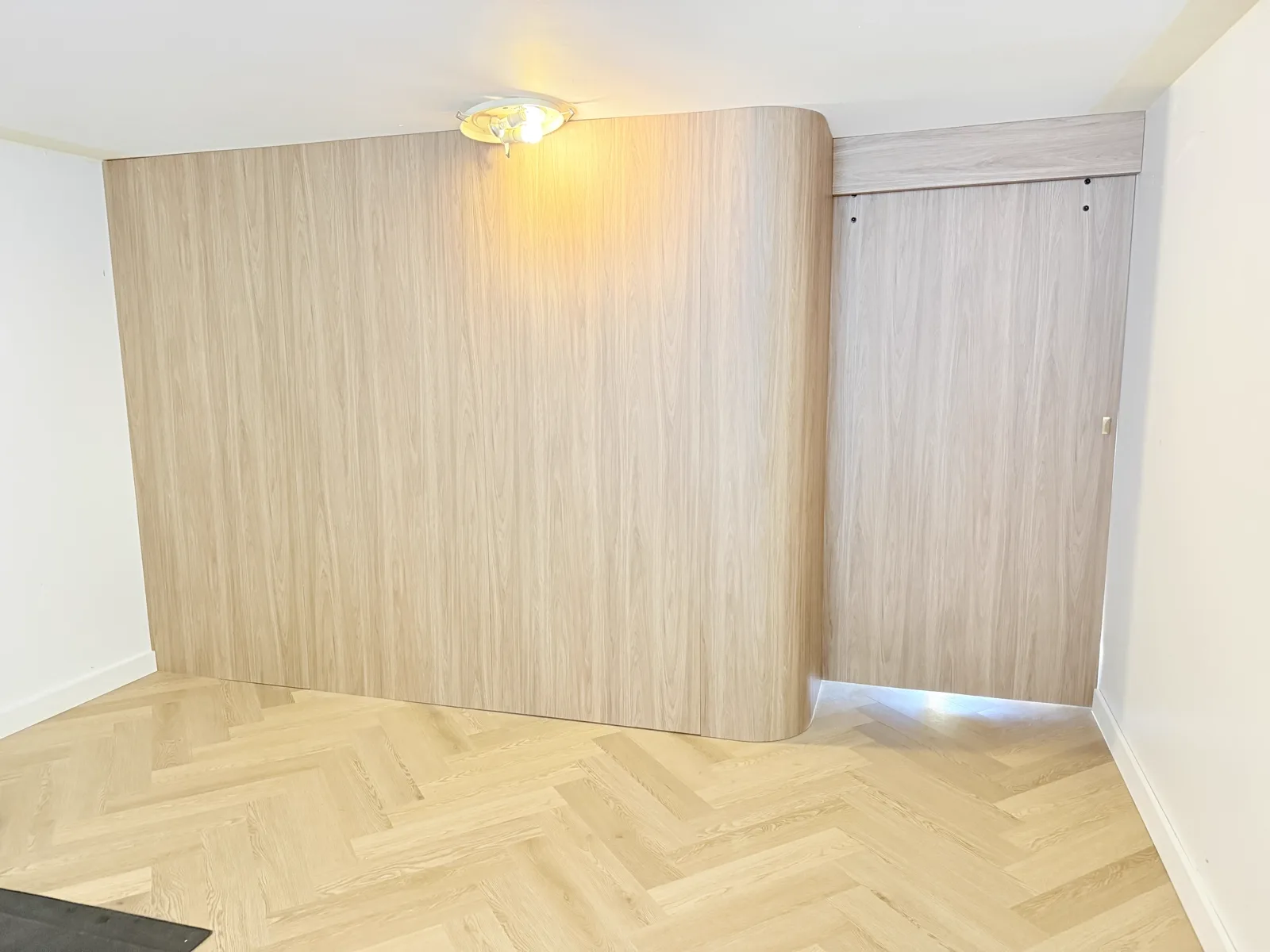
What drives the cost of a custom wardrobe in Sydney? Scope, door type, internal fitout hardware and site conditions all play a role — and understanding each factor helps you scope the job before you approach a joiner.
TL;DR: The cost of a custom wardrobe in Sydney varies significantly depending on scope, materials and the complexity of your brief. A single bay of built-in storage and a fully fitted three-wall walk-in robe are not the same project.
The cost of a custom wardrobe varies significantly
The cost of a custom wardrobe in Sydney varies significantly depending on scope, materials and the complexity of your brief. A single bay built into a bedroom alcove is a contained project. A purpose-built walk-in wardrobe with full drawer banks, mixed hanging heights and feature door detailing across three walls is a different scope entirely — and costs accordingly.
Understanding what drives the difference helps you scope a project before you approach a joiner, and helps you get a quote that reflects what you actually want rather than a ballpark that needs to be revisited once the detail is worked out.
Scope: what are you building?
The scope of a wardrobe project covers: how many rooms, how many bays, whether it is a built-in wall run or a purpose-built walk-in, and how complex the internal fitout needs to be. A two-bay built-in wardrobe with sliding doors and a basic shelf and hanging rail layout is a contained project. A three-wall walk-in robe with an island unit, full drawer banks, mixed hanging heights and feature doors is considerably more.
The width of the wardrobe matters, but so does the height. A floor-to-ceiling wardrobe at 2700mm needs taller carcasses, taller doors, and more care in the installation to stay plumb and scribed properly to the ceiling. A 4.5-metre-wide full-wall wardrobe in a main bedroom is not the same project as a 1200mm addition to a spare room, even if both are described as a built-in wardrobe.
A walk-in robe adds scope in a different way: the room itself becomes the storage unit, which means joinery on three or four walls, a central island or drawer tower, and a door treatment that works as an architectural element rather than just a panel.
Materials: door face and finish
Most wardrobe carcasses use 16mm or 18mm HMR board — a consistent base material that does not vary much between jobs. The visible difference between wardrobes comes from the door faces and internal finish.
Polytec is one of the most common door panel choices for custom wardrobes in Sydney. The range covers timber-looks — Prime Oak, Boston Oak, Coastal Oak Woodmatt — and clean neutrals, all in a durable melamine finish that holds up well to daily use. Laminex offers a similar range and comparable durability. Both are cut from sheet stock, which is efficient and keeps lead times predictable.
MDF doors with a Dulux painted finish — in tones like Lamb's Ear Half, White Polar or any custom colour — cost more per unit because they are made to order, require spray-booth painting, and take more time to install correctly. The result is a more furniture-like quality and any colour in the Dulux range, but at a higher per-unit cost. Mirror panel doors — whether as a full face or as an insert — add material and installation cost above MDF or melamine options. Textured fronts, reeded panels or shaker profiles add more again.
Internal fitout and hardware
The internal fitout of a wardrobe is often where the real cost difference lies between a basic job and one that works well every day.
A single hanging rail and two fixed shelves is the functional minimum. A properly planned wardrobe for daily use includes short hanging (shirts, jackets), full hanging (dresses, coats), adjustable or fixed shelving for folded items, and a bank of drawers. The quality of the drawer system matters: soft-close undermount runners from Blum, Titus or Häfele operate quietly, close fully and last for years without adjustment. Basic push-in runners do none of those things reliably.
Pull-out shoe racks, internal mirrors, integrated LED strip lighting, and central island units in walk-in robes each add to the total — but most of them add to the daily usefulness of the wardrobe in proportion to what they cost. The internal fitout is where the difference between a wardrobe that works and one that is merely storage tends to be most visible.
Door type and opening hardware
Sliding doors are the default in most Sydney bedrooms because they do not require clearance in front of the wardrobe. Full-height sliding panels in Polytec or a timber-look melamine on a top-hung track give the wardrobe a clean, flush face — particularly effective in smaller bedrooms where a hinged door would swing into furniture or the bed. Mirrored sliding panels add a reflected-light quality to smaller rooms but cost more per panel.
Hinged doors work better in dedicated walk-in robes where clearance is not a constraint and where you want the full interior visible at once. Barn doors — a full-height panel on a visible wall-mounted track — are used where the door treatment is a design element in its own right: the Neutral Bay Ben Boyd Road project used a black steel sliding barn door on the walk-in robe with brushed brass bar handles, which suited the warm Polytec Prime Oak interior and connected the wardrobe's finish to the rest of the home's joinery palette.
Handle choice also contributes. Brushed brass, matte black, or brushed nickel bar handles each read differently in the context of the room, and integrated push-to-open systems — where there is no visible hardware on the door face at all — add cost but keep the cabinet face completely clean.
Site conditions: ceiling, room geometry and strata
Ceiling height and room condition directly affect wardrobe cost. A flat ceiling at 2400mm is straightforward to work with. Raked or sloped ceilings require the carcasses and doors to be scribed and cut to follow the slope, which adds time to both fabrication and installation. Cornices that project into the wardrobe space need to be worked around carefully. Skirtings along the wall need to be cut back and reinstated as part of the installation.
Non-square rooms — common in older Sydney homes and apartments — require more careful measurement and scribing so the wardrobe sits flush and the doors operate correctly. A square room on a plan is rarely square in practice once you measure properly.
In strata buildings, permission from the owners corporation may be required before fixed joinery is installed against party walls. Some buildings also have heritage constraints on how rooms connected to the building's external fabric can be altered.
Three real wardrobe projects as reference
Three InsideOut wardrobe projects illustrate how scope and materials play out in practice.
In Neutral Bay on Ben Boyd Road, the walk-in wardrobe was fitted in Polytec Prime Oak throughout — hanging rails, open shelving and a full-width drawer bank with push-to-open Blum soft-close drawers, no visible hardware on any face. The full-height black sliding barn door on a black steel track with brushed brass bar handles gave the wardrobe a considered finish that connected it to the wider joinery fitout in the home, which also included a study desk in Dulux Lamb's Ear Half shaker with a Prime Oak benchtop.
In Mosman, the brief centred on floor-to-ceiling wardrobes that felt built into the room's architecture. Contrasting dark internals against lighter oak-look outer panels gave the wardrobe depth without being heavy, and the internal layout was planned around how the room was actually used rather than around what filled the space most efficiently.
In Cremorne, both the built-in wardrobes and the walk-in robe used a slim shaker profile in polyurethane with Polytec Boston Oak as the internal timber element. The Boston Oak added warmth to the interior fitout while the slim shaker doors kept the external face of the wardrobe tailored and calm — a combination well suited to the existing character of the home.
Every job is priced on its specific scope. Send us your floor plan, a few photos and what you want to change — we can usually give you a clear budget range within a day. Get in touch here.
Frequently asked questions
What drives the cost of a custom wardrobe in Sydney?
Scope, internal fitout complexity and door type are the main variables. A simple bay with sliding doors and a basic shelf-and-hanging layout costs less than a walk-in wardrobe with full drawer banks on soft-close runners, mixed hanging heights and feature door hardware.
What is the difference between Polytec and MDF wardrobe doors?
Polytec is a melamine-faced board — the colour and texture are part of the sheet, making it durable and consistent. MDF doors are painted with a Dulux or similar finish in a spray booth — they allow any colour and have a more furniture-like quality, but cost more per unit to produce.
Sliding or hinged wardrobe doors — which is better?
Sliding doors are the standard choice for most Sydney bedrooms because they do not require clearance in front of the wardrobe. Hinged doors are better suited to walk-in robes where you want to see the full interior at once and where there is room for the door to swing freely.
Does ceiling height affect wardrobe cost?
Yes. Non-standard ceiling heights — particularly raked or sloped ceilings — require the wardrobe to be scribed and cut to follow the slope, which adds time to both fabrication and installation. Cornices and skirtings that project into the joinery run also add to the complexity.
InsideOut Joinery & Renos is a family-run custom joinery and renovation business based in Liverpool, Sydney NSW 2170, serving homeowners Sydney-wide. Call 02 5000 0402 or email info@insideoutjoinery.au. One point of contact — we organise and manage every trade on your job, with quick turnaround and 12 years of experience. Licensed contractor — licence 383725C, ABN 62 912 909 739.