Custom Kitchen Cabinetry Sydney: What It Costs, What You Get, and How to Choose
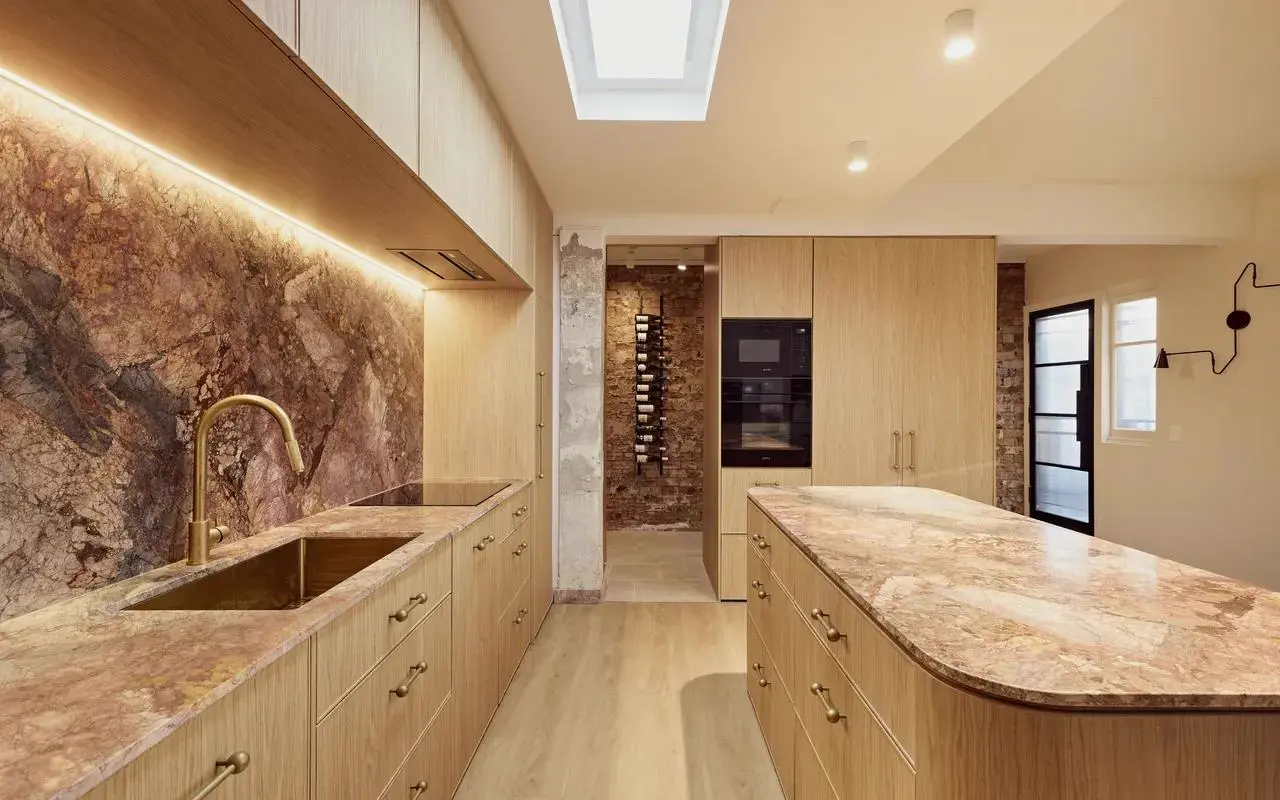
Custom kitchen cabinetry is not just about aesthetics. It is about using your space properly, choosing the right materials, and getting a result that holds up for 15 years. Here is what you need to know before committing.
TL;DR: Custom kitchen cabinetry means every cabinet is built to your room's exact dimensions. It costs more than flat-pack but less than most people think compared to semi-custom. The key advantages are: walls that are not square get handled properly, ceiling height is achievable, and you choose every internal configuration. Budget $15,000–$35,000 for supply and installation of a full custom kitchen in Sydney.
What Custom Kitchen Cabinetry Actually Means
The term 'custom' is used loosely in the kitchen industry. There are three distinct tiers:
Flat-pack (IKEA, Kaboodle at Bunnings). Cabinets come in fixed widths — 300mm, 400mm, 600mm, 800mm increments. You assemble them yourself. Total cabinet cost for a standard Sydney kitchen: $2,000–$8,000. Looks acceptable for 3–5 years before hinges and drawer runners degrade. Does not handle non-standard room dimensions well. Filler panels and workarounds are visible in the final result.
Semi-custom (Freedom Kitchens, Kaboodle Installed, some independents). Cabinets are made in the same fixed increments as flat-pack but someone else installs them. Some offer a limited range of modifications. Price: $12,000–$25,000 installed. Better finish than DIY flat-pack. Same constraints on room dimensions.
True custom (independent joiners and joinery companies). Every cabinet is built to your room's exact dimensions. Your 3,247mm wall gets three cabinets that total 3,247mm — not three standard cabinets with a 47mm filler panel squeezed in at the end. Price: $15,000–$50,000+ depending on size, materials, and scope.
The reason most Sydney homeowners choose custom is not price — it is fit. A kitchen that uses every millimetre of the available space looks completely different from one that has been adapted to fit standard sizes.
Custom Kitchen Cabinetry Costs in Sydney (2025)
These figures are for supply and installation of cabinetry only — not benchtop, appliances, tiling, or plumbing.
Small kitchen (under 8 linear metres of cabinets): $12,000–$22,000 Medium kitchen (8–12 linear metres): $20,000–$35,000 Large kitchen (12+ linear metres, island bench): $30,000–$55,000
What drives cost within these ranges:
Cabinet material. Standard 16mm White HMR carcass is the baseline. Colour HMR (not white — any other colour requires sourcing the board separately) adds 20–30% to carcass cost. Plywood carcass (common in high-end fitouts) adds 30–50% to carcass cost but is significantly stronger and handles moisture better.
Door profile. Plain flat doors are cheapest. Shaker doors (standard 60mm profile) add $100–$130 per sheet of doors. Slim shaker (20mm profile) requires 21mm MDF instead of 18mm and adds $120–$150 per sheet. Routed profiles (Woongarrah, Arch) are similar pricing to shaker.
Internal fitout. Every internal shelf, drawer, divider, and pull-out is an additional cost. A kitchen with 6 standard drawers costs more to build than one with 6 doors and fixed shelves. Pull-out rubbish bins, magic corner units, and drawer inserts are charged separately.
Hardware. Blum is the industry standard for quality hinges and drawer runners. Titus is a solid mid-market option at roughly half the price. The difference is noticeable over years of use — Blum hardware still adjusts properly 10 years later. Ask which brand is specified in your quote.
Painting. If your doors are 2-pac polyurethane (which they should be for a kitchen), painting is a separate trade. Some joiners supply raw primed doors and hand off to a painter. Others supply factory-painted doors. Confirm which applies to your quote.
How Custom Cabinets Are Built
Understanding the build process helps you ask better questions when comparing quotes.
Drawings first. A proper custom kitchen starts with a dimensioned drawing — either a simple elevation drawing or a full 3D render. You approve the drawing before anything is cut. Any joiner who starts cutting before you have signed off on a drawing is taking a risk on your behalf.
Material ordering. Once drawings are approved, the joiner orders board. Standard 16mm White HMR comes in 2400×1200mm sheets. A medium kitchen might use 8–12 sheets of carcass board. Doors are ordered separately — if you are getting 2-pac painted doors, these go to a door supplier who primes, fills, sands, and spray-paints them.
Cutting and assembly. Panels are cut on a panel saw or CNC router to the exact dimensions from your drawings. Edges are banded with a matching ABS edge. Carcasses are assembled — normally 6 or 8 screws per joint, cam locks, and back panels.
Delivery and installation. Flat-pack cabinets arrive ready to assemble. Custom cabinets typically arrive pre-assembled (or flat-packed for very large kitchens to fit through doors). A two-person crew installs a standard kitchen in one day. Levelling, scribing to walls, and fitting kicks, panels, and fillers is a significant part of the install time.
Benchtop template. Once cabinets are installed and level, a stone fabricator templates the benchtop — they measure the actual installed cabinets, not the drawing. Template to delivery for engineered stone is typically 7–10 working days.
What to Look For When Comparing Quotes
When you have two or three quotes on the table, the price difference is often explained by what is and is not included. Here is how to compare properly.
Check carcass material. Is it 16mm HMR, 18mm HMR, or MDF? HMR is correct for kitchens. MDF in a kitchen carcass is not appropriate — it swells.
Check door thickness. Standard painted doors are 18mm MDF. Slim shaker requires 21mm. Both are correct depending on the profile you want. If the quote just says 'MDF doors' without a thickness, ask.
Check drawer count vs door count. A kitchen with more drawers costs more to build and install. If one quote has 8 drawers and another has 4, you are comparing different kitchens.
Check hardware brand. Blum or Hettich for quality. Titus for mid-market. Generic hardware from a China-sourced supplier is a red flag — ask the brand name and look it up.
Check what is excluded. A quote might exclude: benchtop, appliance cutouts, kickboards, end panels, cornice, and painting. Ask for a scope exclusions list — not just what is in, but what is specifically out.
Check the warranty. Most quality Sydney joiners offer 2 years on workmanship and hardware manufacturer warranty (Blum offers 10 years on their drawer systems). If there is no written warranty, ask why.
InsideOut Joinery & Renos builds fully custom kitchen cabinetry across Sydney from our Liverpool workshop. Every job includes dimensioned drawings before a single cut is made. Call 02 5000 0402 or visit insideoutjoinery.au.
Lead Times and What Affects Them
Custom kitchen cabinetry in Sydney has real lead times. Understanding them prevents scheduling problems.
From deposit to delivery: typically 3–5 weeks for a standard kitchen. This includes: drawing and approval (3–7 days), material ordering (3–5 days), manufacturing (2–3 weeks), and quality check before delivery.
Door lead times. If your doors are 2-pac polyurethane painted, add another 5–10 working days to the manufacturing timeline — painted doors go to a specialist spray painter, not back to the joiner.
Stone benchtop lead times. Template to delivery is typically 7–10 working days from a Sydney stone fabricator. If you choose a less common material (bookmatch slabs, rare colourways), add another week.
What extends lead times:
- Colour board (non-white HMR) — board is not always in stock
- Custom profiles — routed doors not in the standard range may require special tooling
- Peak periods — January to March and September to November are the busiest periods for Sydney kitchen renovations
- Changes after drawings are approved — any change resets part of the manufacturing queue
What to confirm before deposit:
- Delivery date in writing
- Installation date booked (not 'when materials are ready')
- Who handles the stone benchtop templating and whether it is included in the quote or a separate arrangement
Frequently asked questions
How much does custom kitchen cabinetry cost in Sydney?
Custom kitchen cabinetry in Sydney costs $12,000–$55,000 for supply and installation depending on kitchen size and materials. A medium-sized kitchen (8–12 linear metres) with standard HMR carcass, painted MDF doors, and Blum hardware typically runs $20,000–$35,000 for the cabinetry component. This does not include benchtop, appliances, tiling, or trades.
What is the difference between custom and semi-custom kitchen cabinets?
Semi-custom cabinets come in fixed standard widths (300mm, 400mm, 600mm, 800mm increments). Custom cabinets are built to your exact room dimensions — every panel is cut to size. The result is a kitchen that uses the full width and height of your space without filler panels or gaps.
How long does it take to get custom kitchen cabinets made in Sydney?
From deposit to delivery, custom kitchen cabinets take 3–5 weeks in Sydney. This includes drawing approval, material ordering, and manufacturing. If doors are 2-pac painted, add 5–10 working days for the painting process. Installation is typically 1–2 days for a standard kitchen.
What carcass material should kitchen cabinets be made from?
Kitchen cabinet carcasses should be made from 16mm or 18mm moisture-resistant HMR board (High Moisture Resistant). HMR handles the humidity from cooking without swelling. Standard MDF is not recommended for kitchen carcasses. Plywood is used in premium builds and offers the best moisture performance.
Is Blum hardware worth the extra cost for kitchen cabinets?
Yes, for a kitchen that gets daily use. Blum hinges and drawer runners are engineered for 100,000+ open/close cycles. Their adjustment systems stay functional after years of use — you can level a door or adjust a drawer runner 10 years later without replacing the hardware. Generic hardware often fails or loses adjustment within 3–5 years.
InsideOut Joinery & Renos is a family-run custom joinery and renovation business based in Liverpool, Sydney NSW 2170, serving homeowners Sydney-wide. Call 02 5000 0402 or email info@insideoutjoinery.au. One point of contact — we organise and manage every trade on your job, with quick turnaround and 12 years of experience. Licensed contractor — licence 383725C, ABN 62 912 909 739.