Bathroom Renovation Cost Sydney 2026 — What Drives the Price
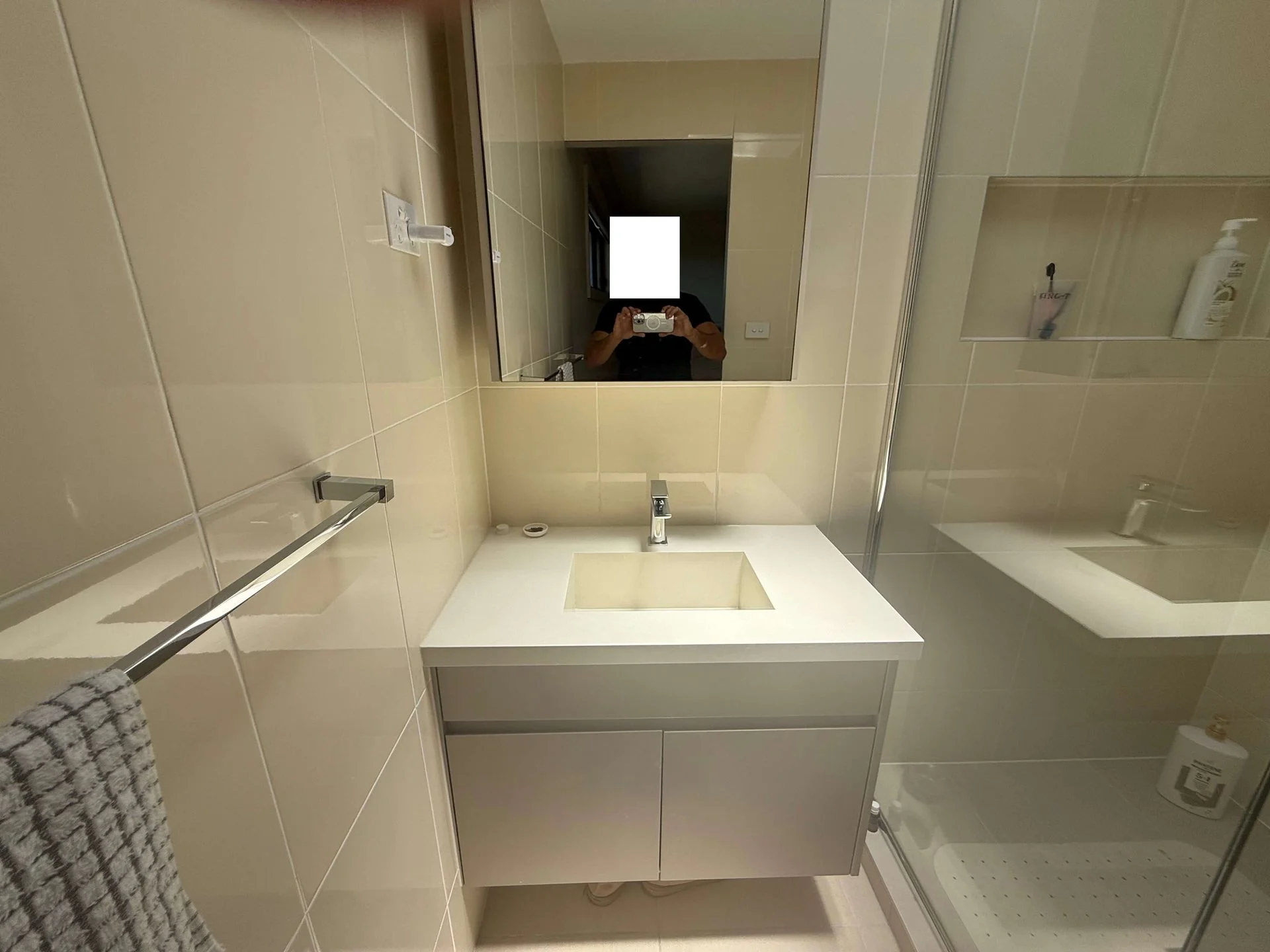
What drives the cost of a bathroom renovation in Sydney? Wet point relocation, tile choices, custom vanity joinery and site conditions all play a role — and understanding each one helps you brief the job accurately before any trade is booked.
TL;DR: The cost of a bathroom renovation in Sydney varies significantly depending on scope, materials and the complexity of your brief. Whether the wet points stay where they are or need to move is often the single biggest factor.
The cost of a bathroom renovation varies significantly
The cost of a bathroom renovation in Sydney varies significantly depending on scope, materials and the complexity of your brief. A bathroom that keeps its layout — same drain positions, same plumbing connections — and updates the tiles, fittings and vanity is a contained project. A bathroom where the toilet is moving, the shower is relocating, or the room is extending into adjacent space is a fundamentally different scope.
The same finished photo can represent very different amounts of work. A bathroom renovation priced without a proper site assessment is almost always either missing scope items or carrying contingency that will not apply to your job. The only way to get an accurate number is to start with an accurate brief.
Scope: wet points, layout and what moves
Bathrooms concentrate multiple trades into a small room — plumber, tiler, electrician and joiner. The fewer times those trades need to work around each other's work, the more predictably the project runs and the more contained the cost is.
Keeping the wet points in their current positions is the most effective cost control in a bathroom renovation. The moment a drain needs to move — whether in a concrete slab or a timber floor — the scope, complexity and coordination requirement increase meaningfully. In a concrete slab building, relocating a waste point involves a concrete saw and concrete reinstatement. In a timber-frame home it is more manageable, but it still adds to the plumber's scope.
Other layout changes — moving the toilet to the other side of the room, reconfiguring the shower to a different wall, adding a bath where the room previously had none — each carry their own trades impact and need to be scoped properly before any pricing begins.
Materials: tiles, vanity joinery and hardware
Tiles are typically the most variable line item in a bathroom renovation — and not just because of the tile price per square metre. The tile format, the extent of tiling and the substrate preparation required all affect both material and labour cost. A 600mm×600mm large-format floor and wall tile in a mid-range range is the most common choice across Sydney bathroom projects. Moving to a 900mm×1800mm format or to imported stone increases material cost and tiling labour per square metre.
Vanity joinery is the second significant variable. A semi-custom vanity from a supplier sits at one end of the range. A fully custom wall-hung vanity built by a joiner — in Polytec Sublime Teak, a painted MDF in Dulux White Polar, or a reeded timber-look finish — sits at the other. The result is a different class of product: built to the exact dimensions of the room, in the finish of your choice, with hardware specified to suit rather than standardised.
Mirror cabinets and shaving cabinets with integrated storage and lighting cost more than a plain mirror. Brushed brass or matte black tapware and Blum or Häfele internal fittings each add to the total in proportion to what is specified.
Labour and trade sequencing
The trade sequence in a bathroom renovation is fixed: demolition, rough-in plumbing, waterproofing, tiling, fit-off plumbing, joinery installation, electrical fit-off. Each phase depends on the previous one being complete and passing inspection. Any delay in the sequence — waterproofing that needs extra curing time, a plumber who is rescheduled, tiles that arrive late — extends the project and typically adds cost.
The tiler is usually the highest labour cost in a bathroom. Their work depends on both the plumber and the waterproofer being finished and approved first. The joiner for the vanity and any built-in storage typically comes last, once the tiling is done and the room is in its final geometry.
In Sydney in 2026, tilers and plumbers across most suburbs — particularly the Northern Beaches, Eastern Suburbs and Hills District — are booked several weeks ahead. Timeline planning is as important as budget planning.
Site conditions: what the demolition phase reveals
Older Sydney homes — particularly those built before 1980 — regularly reveal unexpected conditions when the bathroom is opened up. Corroded or undersized copper plumbing. Waterproofing that was not done to standard and has caused substrate damage. Out-of-level floors that require a screed before tiling can begin. In strata buildings, the owners corporation typically requires approval before work starts, and some buildings have drainage conditions that affect what the plumber can do.
None of these conditions are unusual. They are present in a large proportion of Sydney bathrooms, particularly in period homes across the Inner West, Eastern Suburbs and Lower North Shore. The cost impact depends on what is found — which is why a site visit before the quote is more reliable than a price based on a description.
Two real bathrooms as reference
Two InsideOut bathroom projects show what different scopes look like in practice.
In the Beaumont Hills renovation, the bathroom included a freestanding bath, a custom floating vanity with a timber-look finish and stone benchtop, an integrated mirror cabinet with storage above and a clean, resolved wall finish throughout. The project was part of a wider home renovation rather than a standalone bathroom job — which affected how the scope was managed and how the joinery connected to the rest of the home's finish.
In the Epping project, the main bathroom carried the same Laminex Sublime Teak material direction as the rest of the home's joinery. The vanity was a reeded floating panel in Sublime Teak with a vessel sink and brushed brass tapware — a backlit round mirror sat above it. A freestanding bath in a clean white finish completed the room. The decision to carry the same timber tone from the kitchen through to the bathroom was deliberate: it made the whole home feel resolved rather than assembled room by room.
Every job is priced on its specific scope. Send us your floor plan, a few photos and what you want to change — we can usually give you a clear budget range within a day. Get in touch here.
Frequently asked questions
What is the biggest cost driver in a bathroom renovation in Sydney?
Whether wet points are moving. Keeping drain and plumbing positions in place is the most effective cost control in a bathroom renovation. Relocating a waste point — particularly in a concrete slab building — adds significant scope to the plumber's work and can extend the overall project timeline.
Is waterproofing required in every bathroom renovation in Sydney?
Yes. Waterproofing is mandatory under Australian Standard AS 3740 in all wet area installations. Any scope that skips or cuts corners on waterproofing creates real liability and typically causes problems within a few years.
How long does a bathroom renovation take in Sydney?
Standard bathrooms take three to four weeks from installation start to completion. Complex jobs with structural changes, concrete saw work or imported tiles can run six to eight weeks. Allow four to six weeks for planning, quoting and material ordering before installation begins.
Can I renovate a bathroom in a strata building in Sydney?
Yes, but strata buildings have specific requirements around waterproofing methods, penetrations, trade noise management and drainage compatibility. The owners corporation will usually require work approval before construction starts, and the plumber will need to confirm the new layout is compatible with the building's drainage stack.
InsideOut Joinery & Renos is a family-run custom joinery and renovation business based in Liverpool, Sydney NSW 2170, serving homeowners Sydney-wide. Call 02 5000 0402 or email info@insideoutjoinery.au. One point of contact — we organise and manage every trade on your job, with quick turnaround and 12 years of experience. Licensed contractor — licence 383725C, ABN 62 912 909 739.