Apartment Renovation Ideas for Sydney Units and Apartments
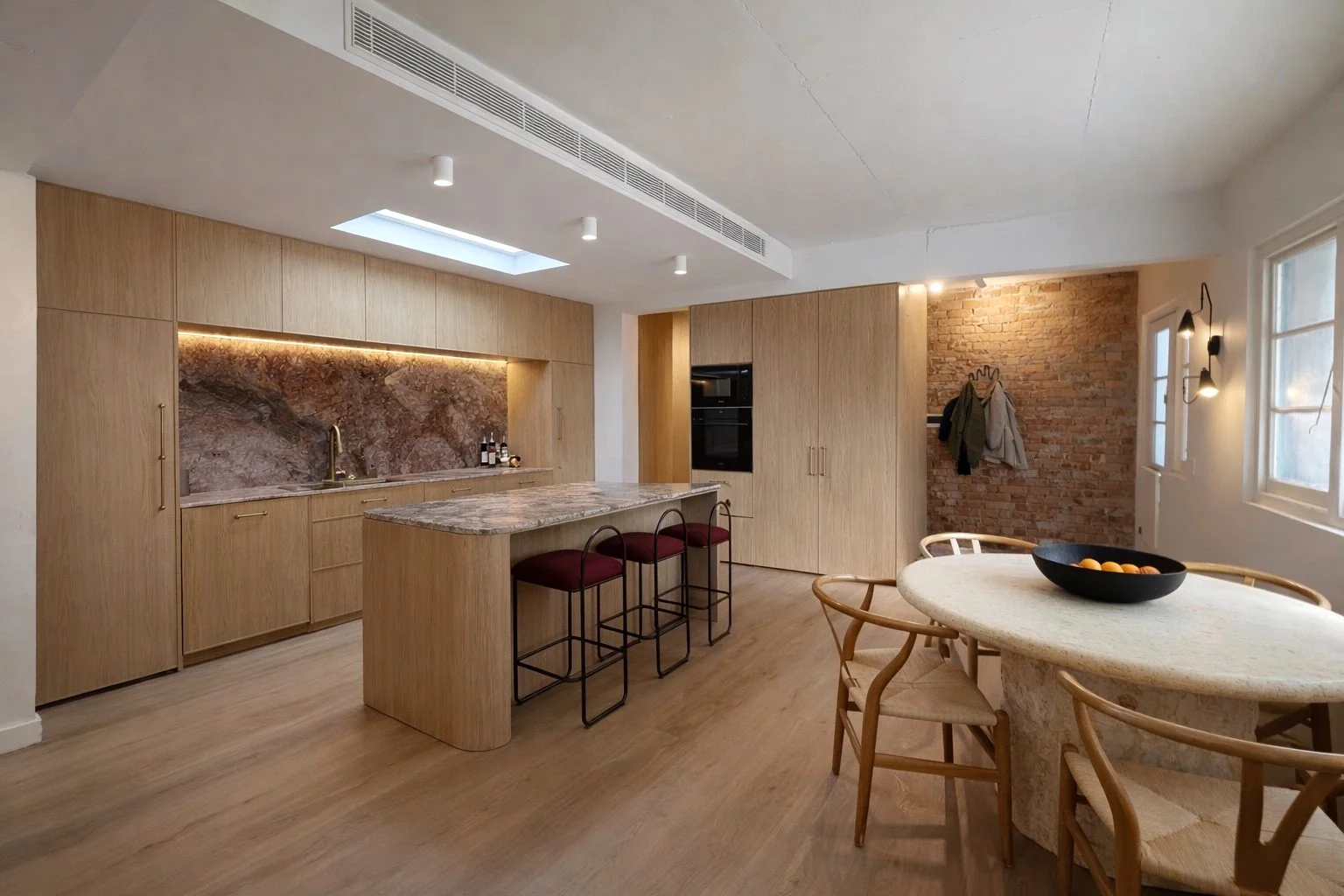
Renovating a Sydney apartment means working within strata rules, tighter footprints and shared walls. Here are the practical ideas that actually pay off — in the kitchen, the bathroom and your storage — plus what needs approval and how a strata build gets managed.
TL;DR: Apartment renovations in Sydney need to work within strata rules, smaller footprints, and shared walls. The biggest wins come from kitchens, bathrooms, and smart storage — not structural changes.
Understanding Strata Approval for Renovations
I'm a licensed contractor based in Liverpool, and the first thing I tell any apartment owner is this: before you plan a single tile, you need to understand what your strata scheme will and won't allow. Get this wrong and the work stops.
Renovations in a strata building fall into rough categories. Cosmetic work — painting, replacing a tap, swapping a vanity unit, fitting new joinery that doesn't touch common property — generally doesn't need approval. Minor renovations, like changing the kitchen or recessing things into non-structural walls, usually need approval from the owners corporation by ordinary resolution. Anything touching waterproofing, plumbing through common property, structural walls, or the building's exterior is a major renovation and needs a formal approval by special resolution at a general meeting.
To apply, you submit a renovation request to the strata committee or managing agent, usually with plans, a scope of work, your contractor's licence and insurance, and details of the trades. Common rejection reasons are missing waterproofing detail, no licensed contractor named, and works that affect shared services. Timelines vary — a simple approval can take a couple of weeks, but anything needing a general meeting can take one to two months, so factor that in early.
Kitchen Renovation Ideas for Sydney Apartments
Apartment kitchens are usually tight, often a galley or a single run against one wall, so the goal is making every centimetre work rather than chasing a big island you don't have room for. In a narrow footprint, a galley layout actually works well — two efficient runs, or one run with a slim peninsula if there's space, beats trying to force an L-shape into a corner that can't take it.
The biggest gains come from storage you can win without touching structure. Take the cabinetry to the ceiling instead of leaving a dead gap above the wall units. Use deep drawers instead of low cupboards so nothing gets lost at the back. Fit a slim pull-out pantry beside the fridge, and use corner carousels so awkward corners earn their keep.
Integrated appliances are a strong move in a small kitchen — an integrated fridge and dishwasher behind matching panels keep the run clean and make the space read larger. We can supply and install the appliances as part of the project. On finishes, lighter benchtops and matt doors bounce light around and make a compact kitchen feel open. See the range on our apartment renovations page.
Bathroom Renovation Ideas for Sydney Apartments
Apartment bathrooms are small, and the smart moves are about making the room feel bigger and last longer, not cramming more into it. The biggest decision is wet room versus a separate shower enclosure. A wet room — where the whole floor is waterproofed and falls to a single drain, with no raised hob or screen partition — suits very small bathrooms beautifully because it removes visual clutter and there's no fiddly screen track to clean. It does need careful waterproofing and the right floor falls, which has to be done to NSW standards.
A floating, wall-hung vanity is one of the best things you can do in a small bathroom. Lifting it off the floor shows more tile underneath, which tricks the eye into reading the room as larger, and it makes cleaning the floor far easier. Pair it with a frameless glass shower screen rather than a framed one — fewer lines, more light through the room.
Run the tiling wall to wall and floor to ceiling in a consistent tile to avoid breaking the space into small panels; a large-format tile means fewer grout lines and a calmer, bigger feel. These are simple choices that make a real difference in a compact strata bathroom.
Storage Ideas for Sydney Apartments
Storage is where apartment living is won or lost, and it's where good joinery pays for itself fastest. The single best move is floor-to-ceiling built-in joinery wherever you have a spare wall or alcove — running cabinetry the full height captures the dead space near the ceiling that freestanding furniture never uses, and a built-in wall of storage holds far more than the same footprint of shelves and frees the floor.
Built-in wardrobes are a clear win in apartment bedrooms. A custom wardrobe fitted to the exact wall, with the right mix of hanging, drawers and shelving for what you actually own, holds dramatically more than a freestanding robe and doesn't waste the gaps. The same thinking applies to a pull-out pantry in the kitchen — tall and narrow, it fits where a cupboard can't and keeps everything visible.
Don't overlook the laundry. In a lot of Sydney apartments the laundry is a cupboard, and integrating a stacked washer and dryer behind cabinetry, with a fold-out bench and shelving above, reclaims the space without giving up function. Smart, made-to-measure joinery is the difference between an apartment that feels cramped and one that feels considered.
What Apartment Renovations Add the Most Value
If your budget is limited, spend it where buyers and tenants actually look. In a Sydney apartment, that's the kitchen and the bathroom, in that order, with smart storage close behind.
The kitchen is the room buyers judge first. A dated kitchen drags the whole apartment's perceived value down, and a clean, well-built one lifts it, because people picture themselves living there. The bathroom is next — a fresh, well-finished bathroom signals that the apartment has been looked after, and a tired one signals the opposite. Both are rooms where quality work is visible and immediately reassuring.
Storage is the quiet value-add that's easy to underrate. Apartment buyers are acutely aware of space, and built-in wardrobes and clever joinery make an apartment feel larger and more liveable than the floor plan suggests, which absolutely influences offers. What rarely pays off in an apartment is expensive structural change — moving walls or plumbing across the floor plate costs a great deal and seldom returns it at sale. The best return comes from doing the kitchen, bathroom and storage properly within the existing footprint, not reshaping the apartment.
Managing an Apartment Renovation in Sydney
Renovating in a strata building has a set of practical hurdles a freestanding house doesn't, and managing them well is half the job. Most schemes set noise restrictions — no loud or percussive work outside set hours, often something like 8am to 5pm on weekdays and limited or no work on weekends. Break those and you'll have neighbours and the strata manager on the phone fast.
Access is the next one. You're sharing a lift and corridors with residents, so materials and rubbish often have to go through a single service lift within booked windows, and the lift may need protective padding installed first. Waste removal can't just pile up in the car park — it has to be carted out and disposed of properly, which takes planning when you can't park a skip out front. Parking for trades is frequently tight as well.
This is exactly where running everything through one team earns its keep. We handle the strata liaison, book the lift and access windows, protect common areas, schedule trades to work within the permitted hours, and manage waste removal so the building stays happy. One point of contact deals with the strata manager so you're not caught between your committee and five separate contractors.
Talk to us about your Sydney apartment
Apartment renovations reward planning. Get the strata approval sorted early, focus the budget on the kitchen, bathroom and storage, and work within the footprint rather than fighting it — and a compact unit can live far bigger than its floor plan suggests.
We're a family-run, licensed contractor (NSW 383725C) with twelve years behind us, and we organise and manage every trade on apartment jobs — including the strata liaison, lift bookings and access that a unit renovation needs. If you want to know what's possible in your apartment, or you'd like a fixed-price quote, call us on 02 5000 0402 or send through your plans and a few photos. If a bathroom's on the list, our bathroom renovation cost guide walks through real numbers. No pressure, no obligation. We're Liverpool-based and working right across Sydney.
Frequently asked questions
Do I need strata approval to renovate my Sydney apartment?
Usually, yes, for anything beyond purely cosmetic work. Cosmetic changes like painting, swapping a tap, or fitting joinery that doesn't touch common property generally don't need approval. Minor renovations, such as changing the kitchen or recessing into non-structural walls, normally need the owners corporation's approval by ordinary resolution. Anything affecting waterproofing, plumbing through common property, structural walls or the building exterior is a major renovation and needs a special resolution passed at a general meeting. You apply by submitting a renovation request to the strata committee or managing agent with plans, a scope of work, and your contractor's licence and insurance. Sort this out early, because a major approval can take one to two months.
How much does it cost to renovate an apartment in Sydney?
It depends heavily on scope, but as a rough guide a Sydney apartment kitchen renovation typically runs $20,000 to $35,000, and an apartment bathroom $15,000 to $30,000, with storage and built-in joinery on top depending on how much you do. Apartment work can carry a small premium over a house for the same scope, because of strata access restrictions, lift bookings, protecting common areas, and tighter waste removal, all of which take more coordination. The big cost drivers are the same as anywhere: benchtop and tile selections, the cabinetry finish, and whether plumbing moves. We give fixed-price quotes for a defined scope, which helps keep an apartment budget under control.
Can I combine kitchen and bathroom renovation in a Sydney apartment?
Yes, and in an apartment it often makes good sense to do both at once. Combining them means one strata approval process, one set of lift bookings and access arrangements, one mobilisation of trades, and one period of disruption rather than two. Because we organise and manage every trade on the job, we can schedule the kitchen and bathroom so the plumber, electrician, tiler and cabinetmaker move efficiently between the two rooms instead of being booked twice. That usually shortens the overall timeline and reduces the coordination cost compared with doing them months apart. It also means you live through the noise and access restrictions once, which your neighbours and the strata manager will thank you for.
How long does an apartment renovation take in Sydney?
On-site, a single apartment kitchen or bathroom typically takes about three to four weeks, and doing both together usually runs four to six weeks depending on scope. The bigger variable in an apartment is what happens before work starts: strata approval can add anywhere from a couple of weeks for a simple sign-off to one or two months if it needs a general meeting, and that has to happen before any trades arrive. Access restrictions and permitted working hours in the building can also stretch the on-site timeline slightly compared with a house. We lock selections in and sort the strata approval and lift bookings early so the on-site phase stays as tight as possible.
What is the biggest mistake people make when renovating a Sydney apartment?
The most common mistake is starting work before sorting strata approval, which can mean the renovation gets halted partway through, or worse, you're ordered to undo work that wasn't approved. The second biggest is spending money on structural changes — moving walls or relocating plumbing across the floor plate — which is expensive in an apartment and rarely returns its cost at sale. The smarter approach is to work within the existing footprint and put the budget into the kitchen, bathroom and built-in storage, where the value and the everyday liveability actually come from. Get the strata approval locked in first, use a licensed contractor, and focus the spend where it shows.
InsideOut Joinery & Renos is a family-run custom joinery and renovation business based in Liverpool, Sydney NSW 2170, serving homeowners Sydney-wide. Call 02 5000 0402 or email info@insideoutjoinery.au. One point of contact — we organise and manage every trade on your job, with quick turnaround and 12 years of experience. Licensed contractor — licence 383725C, ABN 62 912 909 739.